If you want to make a What Size Dutch Oven for Pot Roast?pot roast, choosing the right Dutch oven size is essential. It’s not just about fitting the meat inside. The size of your Dutch oven affects how your roast cooks, how tender it gets, and even how much flavor develops.
Many home cooks get frustrated when their roast turns out dry or tough, and often, the wrong Dutch oven is to blame. Let’s clear up the confusion so you can pick the perfect Dutch oven for your next pot roast—whether you’re cooking for two or feeding a crowd.
What Size Dutch Oven For Pot Roast?
The best Dutch oven size for pot roast is usually 5 to 7 quarts. This size gives you enough space for a 3–5 pound roast, plus vegetables and broth, without overcrowding. Most families find that a 6-quart Dutch oven is the ideal balance. Here’s why:
- A Dutch oven that’s too small will crowd the roast, causing uneven cooking and dry edges.
- One that’s too large can make sauces evaporate too quickly, leaving you with a dry meal and less flavor.
- A 5–7 quart size is large enough for most recipes, but still fits well in a standard oven.
If you often cook for just two people, a 4-quart Dutch oven can work for smaller roasts. If you host big gatherings or want leftovers, consider a 7 or 8-quart Dutch oven.
How To Decide The Right Size For Your Needs
Choosing the best Dutch oven size depends on a few key factors. Let’s break them down.
Number Of People
- For 2–3 people: 4 to 5 quarts
- For 4–6 people: 5 to 7 quarts
- For 8 or more: 7 to 9 quarts
Size Of The Roast
Most standard pot roasts use a 3–5 pound chuck or brisket. For this size, a 5–7 quart Dutch oven is perfect. If you want to cook a larger roast (6 pounds or more), use an 8-quart or larger Dutch oven.
Room For Veggies And Liquid
Pot roast isn’t just about the meat. You’ll want space for carrots, potatoes, onions, and enough broth or wine to cover about two-thirds of your roast. A too-small pot will force you to leave out vegetables or risk overflow.
Oven Space
Standard ovens fit Dutch ovens up to about 9 quarts. If you have a smaller oven, measure carefully before buying a large pot.
Comparing Common Dutch Oven Sizes
Let’s look at the most popular Dutch oven sizes and what they can handle.
| Size (Quarts) | Roast Size | Servings | Best For |
|---|---|---|---|
| 4 quarts | 2–3 lbs | 2–3 people | Small families or couples |
| 5 quarts | 3–4 lbs | 4 people | Average family meals |
| 6 quarts | 4–5 lbs | 4–6 people | Most families |
| 7–8 quarts | 5–7 lbs | 6–8 people | Large gatherings |
A 6-quart Dutch oven is most popular because it’s flexible. You can make a small roast for two, or a big meal for guests.
Round Vs. Oval Dutch Oven: Does Shape Matter?
Both round and oval Dutch ovens work for pot roast, but the shape can make a difference.
Round Dutch Oven
- Fits better on stovetops and in ovens.
- Good for soups, stews, and baking bread.
- Best for small to medium roasts.
Oval Dutch Oven
- Perfect for long cuts of meat like brisket or a large chuck roast.
- More space for vegetables around the roast.
- Slightly harder to fit in a small oven or on a standard burner.
If you mostly cook pot roast, an oval Dutch oven is often more practical. But for all-purpose use, a round Dutch oven is easier to handle.
Material And Weight: What Should You Consider?
The classic Dutch oven is made of enameled cast iron. It holds heat well, cooks evenly, and cleans up easily. But cast iron is heavy—especially in bigger sizes.
- 4-quart Dutch oven: About 8–10 pounds empty
- 6-quart Dutch oven: 13–15 pounds empty
- 8-quart Dutch oven: Up to 18 pounds empty
Add a roast and vegetables, and the pot can get heavy. If you have trouble lifting, a 4–5 quart size may be easier to handle.
How To Measure Your Dutch Oven
Not sure what size Dutch oven you have? It’s easy to check:
- Fill it with water, one quart at a time, and count how many quarts it holds.
- Look at the bottom or side—many Dutch ovens have the size stamped or printed on them.
If you’re buying online, check the inside measurements. A standard 6-quart Dutch oven is about 10–11 inches wide and 4–5 inches deep.
Why Size Matters For Pot Roast Success
The size of your Dutch oven changes how your pot roast turns out.
- Too small: The meat touches the sides, cooks unevenly, and may dry out.
- Too large: Liquid spreads out, evaporates fast, and can burn.
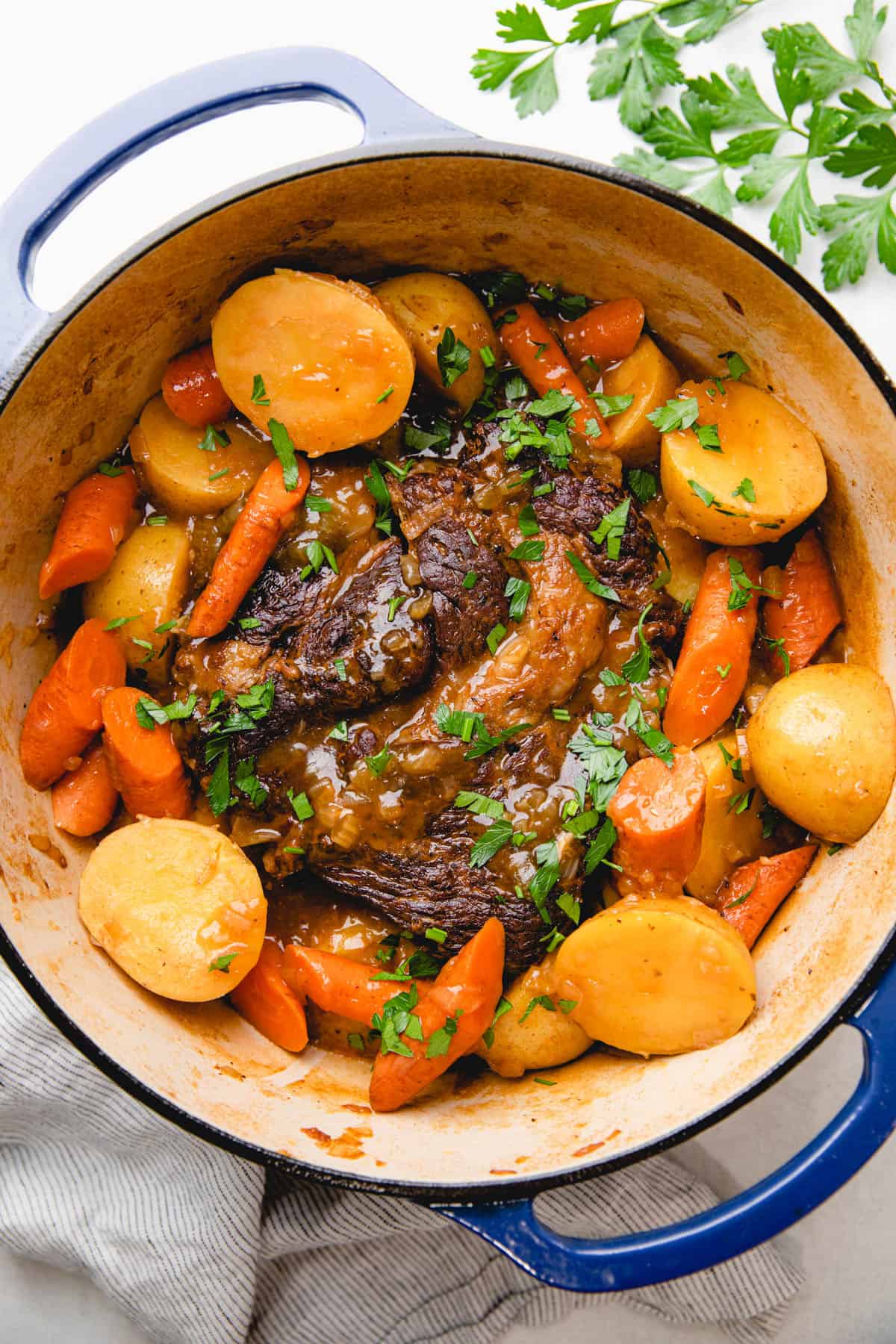
- Just right: The roast sits comfortably, liquid covers it partway, and flavors blend well.
A well-sized Dutch oven also lets you brown the roast and vegetables without crowding—this is key for flavor.
Common Mistakes When Choosing Dutch Oven Size
Many people buy a Dutch oven that’s too small or too big for their needs. Here are common mistakes:
- Thinking bigger is always better: Large Dutch ovens are heavy and take up space. If you rarely cook for a crowd, a huge pot just adds hassle.
- Not leaving room for veggies: Skipping vegetables because your pot is full means you miss out on flavor and nutrition.
- Forgetting about oven size: Some big Dutch ovens won’t fit in smaller ovens.
- Ignoring the roast cut: Long briskets need an oval Dutch oven, while a round pot may work for a chuck roast.
Tips For Perfect Pot Roast In Your Dutch Oven
- Brown the meat first. Sear all sides in the Dutch oven before adding liquid. This adds deep flavor.
- Add enough liquid. Use broth, wine, or water to cover about 2/3 of the roast. Too much liquid makes the roast boil instead of braise.
- Don’t overfill. Leave at least one inch at the top so the liquid doesn’t bubble over.
- Layer vegetables. Put sturdy veggies like carrots and potatoes under the meat. They’ll soak up juices.
- Keep the lid tight. A good seal keeps moisture in and prevents drying.
- Cook low and slow. 300°F (150°C) for 2.5–4 hours is typical for a 3–5 pound roast.
- Rest before serving. Let the roast sit for 10–15 minutes before slicing. This helps keep it juicy.
When To Buy A Larger Or Smaller Dutch Oven
If you’re unsure, start with a 6-quart. But in some cases, you’ll want a different size.
- Go bigger (7–8 quarts):
- If you love leftovers or cook for groups.
- For large briskets or bone-in cuts.
- When making double recipes.
- Go smaller (4–5 quarts):
- If you cook for two.
- For small kitchens and lighter lifting.
- If you want a pot that doubles for side dishes.
Dutch Oven Brands And Quality
Not all Dutch ovens are created equal. Popular brands like Le Creuset, Staub, and Lodge make high-quality enameled cast iron Dutch ovens. You’ll find cheaper options, but pay attention to these things:
- Even heating: Cheap pots can have hot spots.
- Tight lids: A good seal locks in moisture.
- Warranty: Good brands offer lifetime warranties.
- Size accuracy: Some brands measure to the brim, not usable space.
If you want to compare features, check out resources like Consumer Reports.
Real-world Examples
Let’s look at a few scenarios:
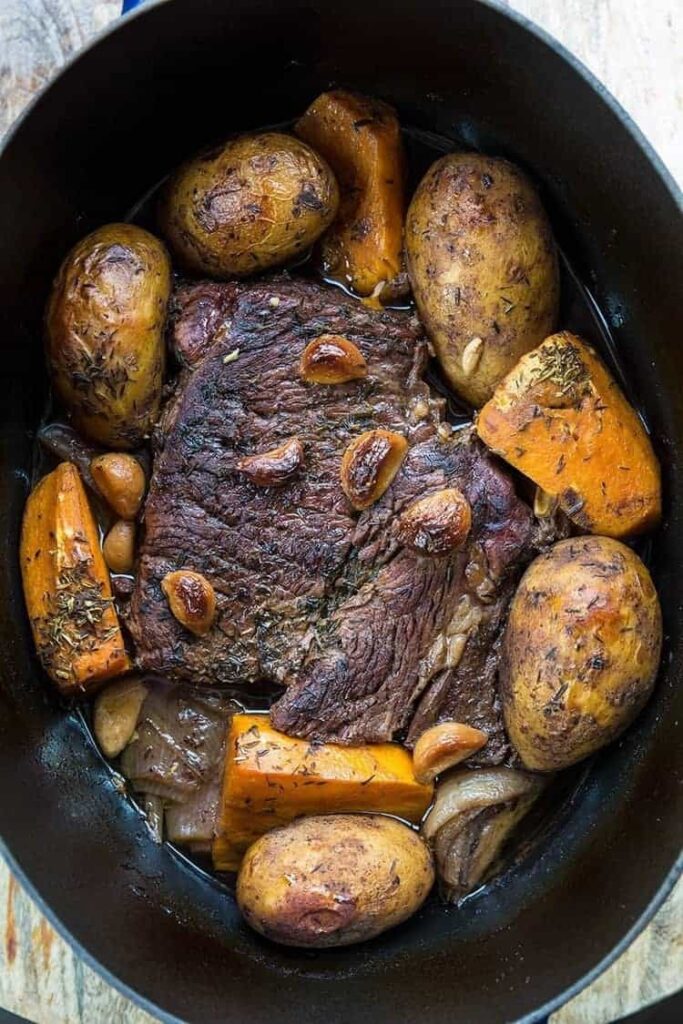
- Family of four: A 5–6 quart Dutch oven easily fits a 4-pound roast, carrots, potatoes, and enough broth. You’ll have some leftovers, too.
- Dinner party (8 people): A 7–8 quart Dutch oven can handle a 6–7 pound roast and lots of vegetables.
- Couple: A 4-quart Dutch oven is perfect for a 2–3 pound roast. You’ll have just enough for dinner and maybe lunch the next day.
How To Store And Care For Your Dutch Oven
A Dutch oven is an investment. Take care of it, and it will last for decades.
- Clean with warm, soapy water. Avoid metal scrapers.
- Dry completely before storing. Moisture can cause rust (for non-enameled pots).
- Avoid high heat. Medium heat is enough; high heat can damage enamel.
- Store with the lid off or with a paper towel inside to prevent moisture.
Sample Cooking Chart: Dutch Oven Size, Roast Weight, And Cooking Time
Here’s a quick reference to help you pair roast size, Dutch oven size, and cooking time.
| Dutch Oven Size | Roast Weight | Cooking Time (at 300°F) |
|---|---|---|
| 4 quarts | 2–3 lbs | 2–2.5 hours |
| 6 quarts | 4–5 lbs | 2.5–3.5 hours |
| 8 quarts | 6–7 lbs | 3–4 hours |
Frequently Asked Questions
What Is The Best Dutch Oven Size For A 4-pound Pot Roast?
A 5 or 6-quart Dutch oven is perfect for a 4-pound roast. It gives you enough space for vegetables and broth, and ensures even cooking.
Can I Use A Dutch Oven That Is Too Big For My Roast?
You can, but be careful. In a very large Dutch oven, liquid can evaporate quickly, making the roast dry. If using a big pot, add extra broth and check the liquid during cooking.
Is An Oval Or Round Dutch Oven Better For Pot Roast?
Oval Dutch ovens are better for large or long roasts, like brisket. Round Dutch ovens work well for smaller roasts or general cooking.
How Do I Know If My Dutch Oven Is Oven-safe?
Most enameled cast iron Dutch ovens are oven-safe. Check the manufacturer’s guide to be sure—some lids or handles may have heat limits.
Do I Need A Heavy Dutch Oven For Pot Roast?
Yes, a heavy Dutch oven (like cast iron) holds heat evenly and maintains moisture. Thin pots can cause uneven cooking and dry roasts.
Choosing the right Dutch oven size makes all the difference for pot roast. With the right fit, your roast will be tender, juicy, and full of flavor—every time.