Making a classic pot roast in a Dutch oven is one of the most rewarding and comforting cooking experiences you can have at home. The aroma that fills your kitchen as the roast slowly braises with vegetables and herbs is enough to make anyone’s mouth water. But beyond the delicious smell, a Dutch oven pot roast is also practical: it’s a one-pot meal, feeds a crowd, and turns an affordable cut of meat into something tender, juicy, and deeply flavorful.
Many people worry that pot roast is too tricky or takes too long to make. In reality, the steps are straightforward, and you don’t need to be a pro to get great results. With a few careful choices and some patience, you can create a memorable meal. This guide will take you through everything you need to know: picking the right meat, prepping your vegetables, seasoning, browning, braising, and serving. You’ll also learn some insider tips that most beginners miss, plus answers to the most common questions. Ready to make your kitchen smell amazing?
What Is A Pot Roast And Why Use A Dutch Oven?
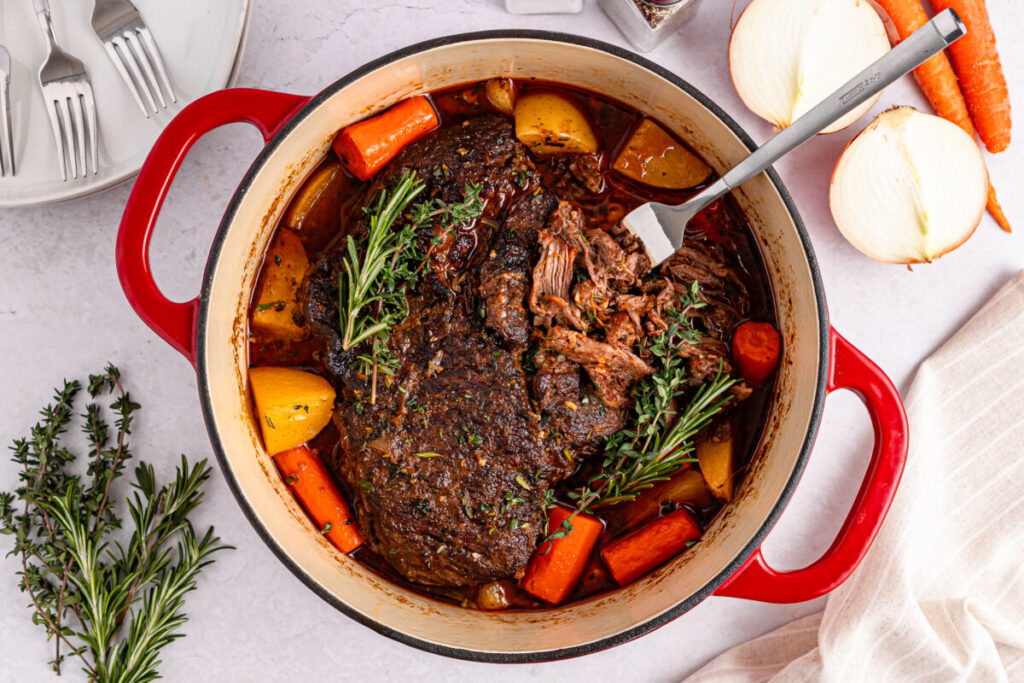
A pot roast is a beef dish made by slowly cooking a tough cut of meat, usually with vegetables and broth, until the meat is fork-tender. The Dutch oven is a heavy, thick-walled pot (often cast iron) with a tight lid. This tool is perfect for pot roast because it holds heat evenly and traps moisture, creating the ideal environment for braising.
Braising is a method where you first brown the meat, then cook it slowly in some liquid. The Dutch oven keeps the moisture inside, which breaks down the meat’s tough fibers and turns them soft and juicy. If you’ve ever had a dry or chewy roast, chances are it wasn’t cooked in a Dutch oven or didn’t have enough time to braise.
Ingredients For A Classic Dutch Oven Pot Roast
To make a delicious pot roast, you need a mix of quality ingredients. Here’s what you’ll need for a roast that serves 6:
- 3 to 4 pounds beef chuck roast (see the next section for more details)
- 2 tablespoons vegetable oil
- 1 large onion, chopped
- 4 cloves garlic, minced
- 4 carrots, peeled and cut into 2-inch chunks
- 3 celery stalks, cut into 2-inch chunks
- 2 pounds baby potatoes (or 5-6 medium potatoes, cut into large chunks)
- 2 cups beef broth (low sodium preferred)
- 1 cup dry red wine (optional, can replace with more broth)
- 2 tablespoons tomato paste
- 2 teaspoons dried thyme (or 2 tablespoons fresh)
- 2 teaspoons dried rosemary (or 2 tablespoons fresh)
- 2 bay leaves
- Salt and black pepper to taste
- Fresh parsley for garnish (optional)
Why These Ingredients Matter
- Chuck roast is the preferred cut because it has marbling (fat), which melts during cooking and keeps the meat juicy.
- Aromatic vegetables like onions, carrots, and celery add a sweet, earthy flavor.
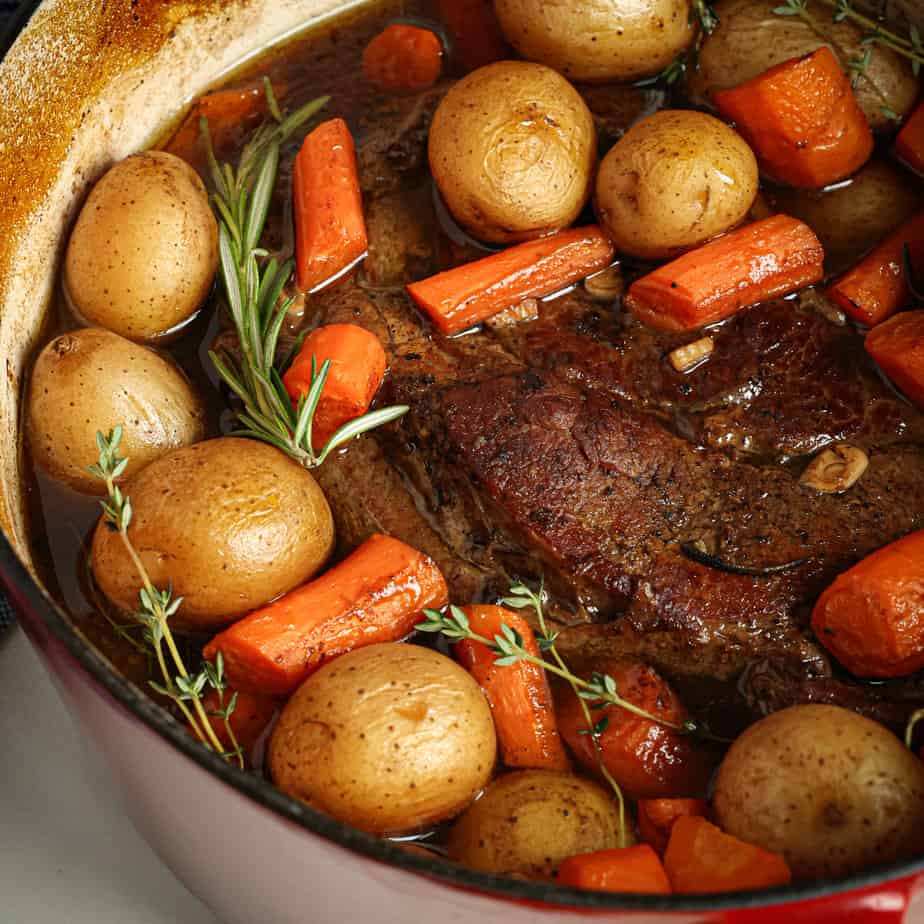
- Potatoes soak up the meat juices, making them a favorite part of the meal.
- Red wine deepens the flavor, but you can skip it for a lighter taste.
- Herbs like thyme and rosemary give a classic aroma.
- Tomato paste adds a rich, umami base.
How To Choose The Right Cut Of Meat
Not all beef roasts are the same. Here’s a quick comparison of the best cuts for pot roast:
| Beef Cut | Texture | Flavor | Price | Notes |
|---|---|---|---|---|
| Chuck Roast | Very tender when braised | Rich, beefy | Affordable | Best all-around choice |
| Brisket | Tender but sliceable | Deep, hearty | Moderate | Needs longer cooking |
| Bottom Round | Lean, firmer | Milder | Lower | Less juicy, but works in a pinch |
Chuck roast is best for beginners because it’s hard to overcook and always comes out juicy. Brisket is also good but usually costs more. Avoid expensive cuts like prime rib or sirloin tip—they’re not suited for slow braising.
Step-by-step Guide: Making Pot Roast In A Dutch Oven
Let’s walk through each step for a perfect result.
1. Preheat And Prep
Preheat your oven to 300°F (150°C). This gentle heat is perfect for slow cooking.
Pat the beef dry with paper towels. This helps the roast brown better, creating more flavor.
Season the meat generously with salt and black pepper on all sides. Don’t be shy—this is your main seasoning.
2. Brown The Beef
Heat 2 tablespoons of vegetable oil in your Dutch oven over medium-high heat.
Place the roast in the pot and sear each side for 4-5 minutes. You want a deep brown crust. Don’t move the meat around too much—let it develop color.
Why brown the beef? This step (called the Maillard reaction) creates rich, roasted flavors that make the final dish much tastier.
When browned, remove the roast and set aside.
3. Sauté The Vegetables
In the same pot, add the onion, carrots, and celery. Cook for about 5 minutes until they start to soften and the onions turn golden.
Add the garlic and cook for 1 minute, stirring so it doesn’t burn.
Stir in tomato paste and cook for 1-2 minutes. This caramelizes the paste and deepens the sauce.
4. Deglaze And Build The Braise
Pour in the red wine (if using). Scrape the bottom of the pot with a wooden spoon to loosen any browned bits—these are full of flavor.
Add the beef broth, then return the roast to the pot.
Toss in the thyme, rosemary, and bay leaves. Tuck the potatoes around the beef.
Non-obvious tip: If you want extra vegetables (like mushrooms or parsnips), wait to add them until the last hour of cooking. Otherwise, they may get too soft.
5. Braise In The Oven
Cover the Dutch oven with its lid and place it in the preheated oven.
Cook for 3 to 3.5 hours. Check after 2.5 hours; the meat should be very tender and easy to pull apart with a fork.
If the roast is not tender, keep cooking—some cuts need a little more time.
Important: If your Dutch oven lid doesn’t fit tightly, cover the pot with aluminum foil before putting the lid on. This keeps moisture from escaping.
6. Finishing Touches
Remove the pot from the oven. Take out the roast and let it rest for 10 minutes.
Use a slotted spoon to transfer the vegetables to a serving dish.
If you want a thicker sauce, skim off extra fat from the liquid. Set the pot over medium heat and simmer until it reduces, or mix 1 tablespoon of cornstarch with 2 tablespoons of cold water and stir it in.
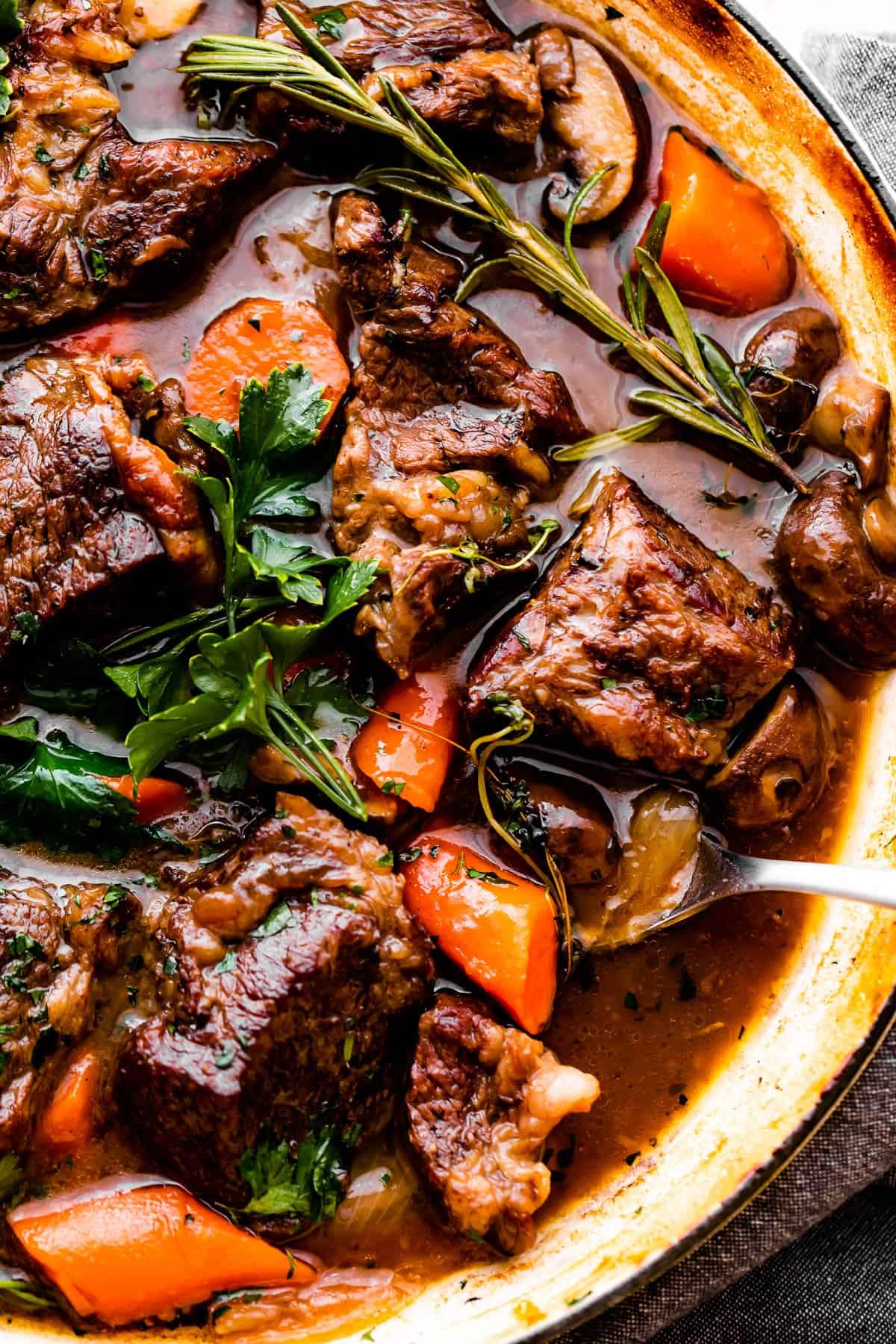
Slice or shred the roast, arrange on a platter with the vegetables, and pour some sauce over everything. Sprinkle with fresh parsley.
Common Mistakes And How To Avoid Them
Even experienced cooks make errors. Here’s how to dodge the most common problems:
- Not browning the meat: Skipping this step means less flavor.
- Using too much liquid: You only need enough to come halfway up the meat. Too much, and you’ll boil the roast instead of braising.
- Adding vegetables too early: Some veggies get mushy if cooked the whole time. Add delicate ones (like mushrooms or green beans) in the last hour.
- Not checking for tenderness: Every cut is different. If the roast isn’t fork-tender, cook it longer.
- Rushing the process: Low and slow is key. Don’t try to speed things up with higher heat.
How To Serve And Store Pot Roast
A Dutch oven pot roast is a complete meal, but you can add extras if you want.
Serving Suggestions
- Spoon the meat and vegetables over mashed potatoes or buttered egg noodles.
- Add a side of crusty bread to soak up the sauce.
- Top with fresh herbs for extra color and flavor.
Storing Leftovers
- Refrigerate leftovers in an airtight container for up to 4 days.
- Freeze for up to 3 months. Thaw overnight in the fridge and reheat gently.
Pro tip: The flavor actually improves after a day in the fridge, as the sauce soaks into the meat.
Pot Roast Variations And Customizations
Pot roast is flexible. Here are some easy ways to change things up:
| Variation | Main Change | Flavor Notes |
|---|---|---|
| Italian-style | Add canned tomatoes, replace thyme/rosemary with oregano/basil | Bright, herby |
| French-style | Use pearl onions, add a splash of cognac | Elegant, rich |
| Spicy | Add chili flakes or chipotle peppers | Smoky, hot |
| Beer-braised | Replace wine with dark beer | Malty, robust |
Insider tip: Always taste your sauce before serving. If it needs more punch, add a splash of vinegar or a pinch of sugar.
Dutch Oven Pot Roast Vs. Slow Cooker And Instant Pot
Wondering if a Dutch oven is really better? Here’s a quick look:
| Method | Texture | Flavor Depth | Effort | Time |
|---|---|---|---|---|
| Dutch Oven | Best, fork-tender | Rich, caramelized | Medium | 3-4 hrs |
| Slow Cooker | Very tender | Milder | Easy | 8+ hrs |
| Instant Pot | Tender, but sometimes stringy | Good, less developed | Easy | 1-2 hrs |
A Dutch oven gives you the best control and depth of flavor, but the other methods work if you’re short on time.
Frequently Asked Questions
How Do I Know When My Pot Roast Is Done?
The roast is ready when it’s fork-tender—you should be able to pull it apart easily with a fork. If it resists, give it more time.
Can I Make Pot Roast Without Wine?
Yes, replace wine with more beef broth or a splash of balsamic vinegar for depth. The dish will still taste delicious.
What If I Don’t Have A Dutch Oven?
You can use a heavy oven-safe pot with a tight lid. In a pinch, a covered roasting pan works, but you may need to check for moisture loss.
Can I Add More Vegetables?
Absolutely. Add root vegetables like parsnips, turnips, or rutabaga at the start. Delicate vegetables should go in during the last hour.
How Do I Thicken The Pot Roast Sauce?
Simmer the sauce on the stove to reduce it, or mix a slurry of cornstarch and cold water, then stir it in while simmering. It will thicken in a few minutes.
A classic Dutch oven pot roast is a meal that feels like home—simple, hearty, and always satisfying. With the right cut of meat, good browning, and slow braising, you’ll get the kind of flavor that brings people back for seconds. Don’t be afraid to experiment with seasonings or vegetables. The more you make it, the more you’ll develop your own perfect version. For more about braising and Dutch ovens, check out this Dutch oven resource. Happy cooking!