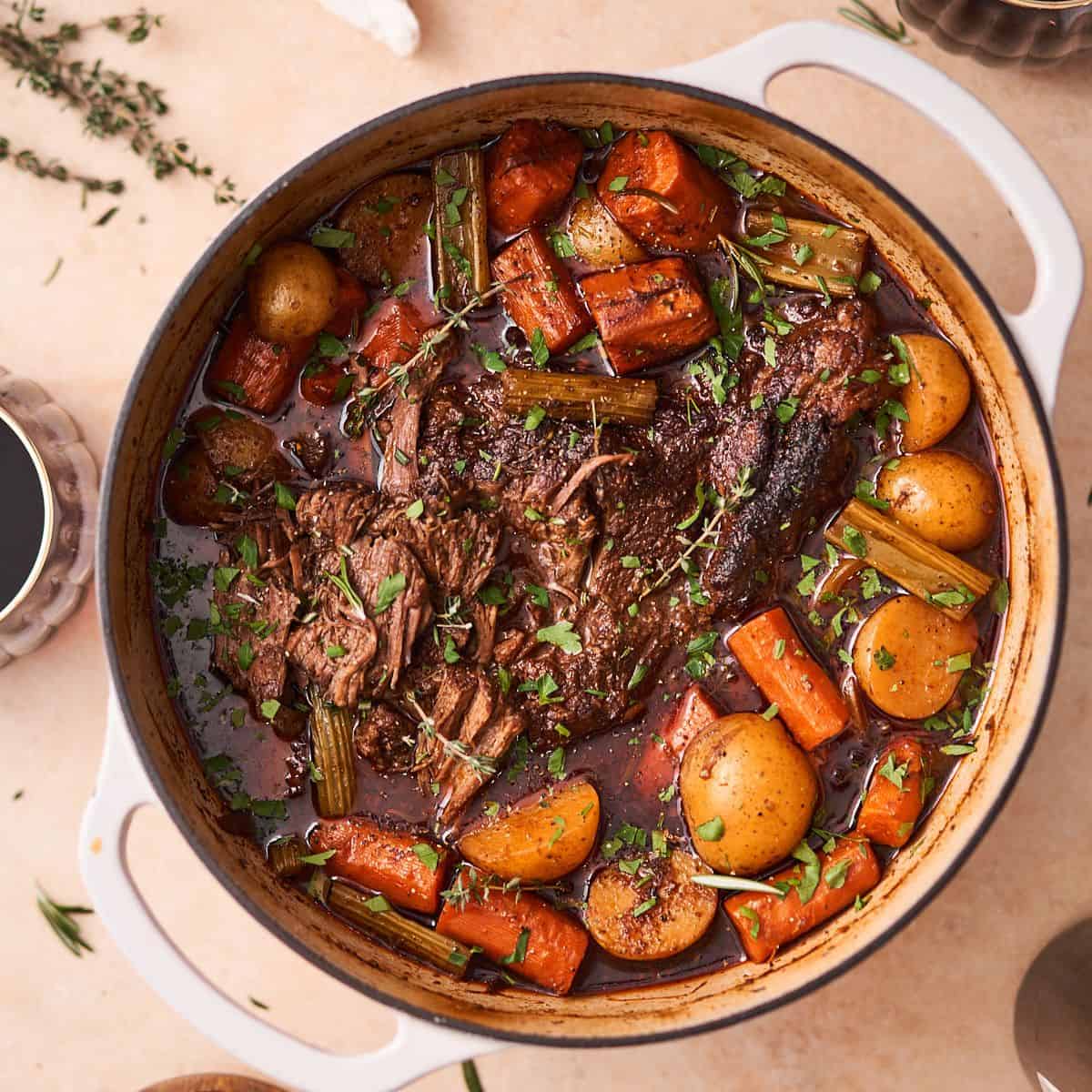
Cooking pot roast in a Dutch oven is a classic way to make a hearty, flavorful meal. Many people wonder exactly how long to cook pot roast in Dutch oven for tender, juicy results. The answer depends on your roast’s size, cut, and cooking temperature. Let’s explore the best timing, methods, and tips so your pot roast comes out perfect every time.
How Long Does It Take To Cook Pot Roast In Dutch Oven?
For most pot roasts, you’ll need 2.5 to 4 hours of cooking time in a Dutch oven. This range covers typical beef roasts weighing between 3 to 5 pounds. The exact time depends on your oven temperature and the meat’s thickness.
- At 325°F (163°C): 3 to 4 hours for a 3–5 lb roast
- At 350°F (177°C): 2.5 to 3.5 hours for a 3–5 lb roast
The roast should reach an internal temperature of 195–205°F for shreddable, tender meat.
Here’s a simple reference table for oven time:
| Oven Temp | Roast Weight | Cook Time |
|---|---|---|
| 325°F | 3 lb | 3 hours |
| 325°F | 5 lb | 4 hours |
| 350°F | 3 lb | 2.5 hours |
| 350°F | 5 lb | 3.5 hours |
What Factors Affect Pot Roast Cook Time In Dutch Oven?
Pot roast cook time depends on a few key factors:
- Roast size and shape: Larger or thicker roasts need more time.
- Meat cut: Chuck roast cooks faster than brisket or round.
- Oven temperature: Lower heat means longer cook time, but often more flavor.
- Liquid amount: More broth or water helps braise the meat, speeding up tenderization.
- Dutch oven material: Heavy cast iron holds heat better than thin metal.
For example, a 4 lb chuck roast at 325°F with plenty of broth will take about 3. 5 hours. If you use less liquid or a leaner cut, it may take closer to 4 hours.
The 5 Best Regulator For 100 lb Propane Tank Regulators: Stop Your Pressure Drops
How Do You Know When Pot Roast Is Done In Dutch Oven?
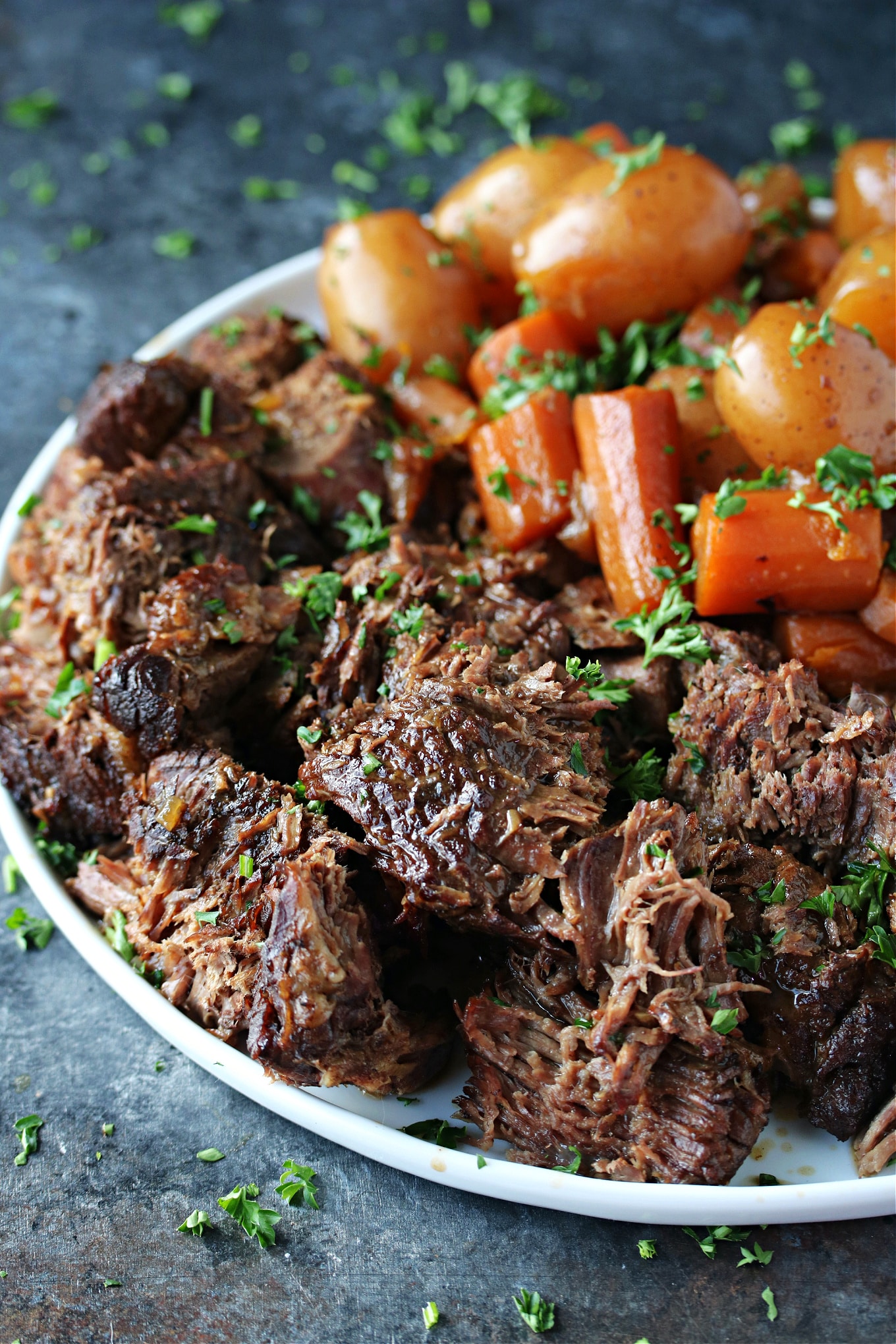
You can tell pot roast is done when the meat is fork-tender and easily pulls apart. The internal temperature should be at least 190°F, but 195–205°F is ideal for very soft texture.
To check doneness:
- Insert a fork or knife into the thickest part. It should slide in easily.
- The juices should run clear, not pink.
- The roast can shred with a fork, not just slice.
Here’s a comparison of doneness levels:
| Internal Temp | Texture | Best for |
|---|---|---|
| 170°F | Firm, sliceable | Serving in slices |
| 195–205°F | Very tender, shreddable | Traditional pot roast |
What Is The Best Method For Cooking Pot Roast In Dutch Oven?
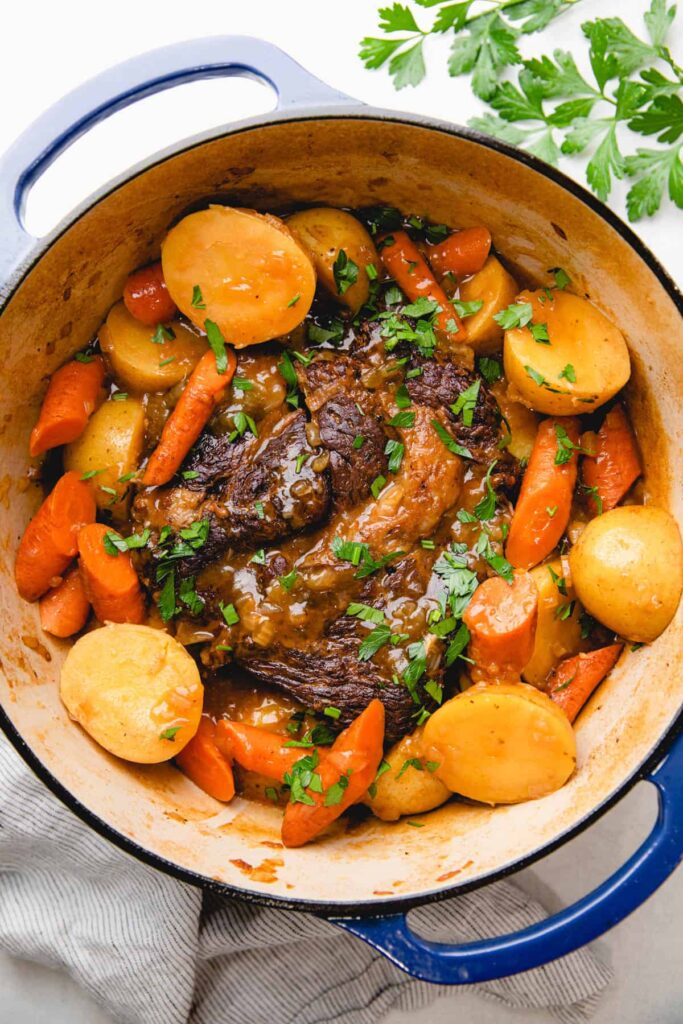
The best method is braising: first sear the roast, then cook it slowly in liquid inside your Dutch oven. This locks in flavor and produces moist, tender meat.
Basic steps:
- Season and sear: Use salt, pepper, and herbs. Sear on all sides in oil for 2–3 minutes per side.
- Add aromatics: Sauté onions, garlic, and carrots in the Dutch oven.
- Deglaze and add liquid: Pour in beef broth, wine, or water to loosen browned bits.
- Return roast and vegetables: Place roast in the liquid. Add potatoes, celery, or other veggies.
- Cover and bake: Place lid on Dutch oven. Bake at 325–350°F for 2.5–4 hours.
- Rest and serve: Let the roast rest for 10–15 minutes before slicing or shredding.
Here’s a quick ingredient list for a classic Dutch oven pot roast:
- 3–5 lb beef chuck roast
- 2 cups beef broth
- 1 cup red wine (optional)
- 1 lb carrots
- 1 lb potatoes
- 2 onions
- 4 cloves garlic
- 2 tbsp olive oil
- 2 tsp salt
- 1 tsp black pepper
- 1 tbsp thyme or rosemary
Cooking tip: Always keep the lid on during baking. This traps steam and helps the meat cook evenly.
Best 20 Lb Propane Tanks: Tested 5 Tanks That Actually Tell You When
How Can You Make Pot Roast More Tender In Dutch Oven?
To make your pot roast extra tender:
- Cook low and slow: Use 325°F or even 300°F for longer time.
- Add enough liquid: Cover at least half the roast with broth or water.
- Rest before slicing: Let the roast sit for 10–15 minutes after cooking.
- Use marbled cuts: Chuck roast, brisket, or short ribs have more fat, which melts and softens meat.
Many beginners miss the importance of letting the roast rest. If you cut it immediately, juices escape and the meat can seem dry.
Another smart tip: If your roast is tough after cooking, try adding 30–45 minutes more. Toughness usually means it needs more time, not less. Avoid cranking up the heat; patience is key.
What Mistakes Do Beginners Make Cooking Pot Roast In Dutch Oven?
Some common mistakes include:
- Using too little liquid: Pot roast dries out without enough broth or water.
- Cooking too fast: High heat makes meat tough. Always use slow, steady heat.
- Not checking doneness: Rely on texture, not just cook time.
- Skipping searing: Searing boosts flavor and color.
- Opening lid too often: This lets steam escape and slows cooking.
One non-obvious mistake is overcrowding the Dutch oven. If veggies and meat are packed tightly, heat circulates poorly and flavors don’t develop as well.
Frequently Asked Questions
How Long To Cook A 3 Lb Pot Roast In Dutch Oven?
A 3 lb pot roast needs 2.5 to 3 hours at 350°F or 3 hours at 325°F. Always check with a fork for tenderness.
Can I Cook Pot Roast In Dutch Oven On The Stovetop?
Yes, you can simmer pot roast on the stovetop. Keep the heat low and let it cook for 3 to 4 hours with the lid on. Stir occasionally and add liquid if needed.
Should Vegetables Be Added At The Start Or Later?
Add hearty vegetables like carrots, onions, and potatoes at the start. Softer veggies (peas, green beans) can be added for the last 30 minutes to avoid mushiness.
Is It Safe To Cook Pot Roast Overnight In Dutch Oven?
It’s not recommended in a standard oven for safety reasons. For slow-cooked overnight pot roast, a slow cooker is better. Dutch ovens are ideal for daytime slow roasting.
What Is The Best Cut Of Meat For Pot Roast In Dutch Oven?
The best cuts are chuck roast, brisket, and bottom round. These cuts have more connective tissue, which breaks down during slow cooking for juicy, tender results.
If you want more detailed info on pot roast cooking, check out Simply Recipes for trusted tips.
Cooking pot roast in a Dutch oven takes patience, but it rewards you with rich flavor and melt-in-your-mouth texture. With the right timing, method, and a few smart tricks, your next pot roast will impress everyone at the table.