
Can Propane Tanks Explode In Heat
Many people worry about propane tanks in summer or during heat waves. The fear is often simple: “Can propane tanks explode in heat?” The quick answer is yes, it is possible, but it’s very rare. Propane tanks are built with safety in mind. Still, it’s important to understand how heat affects propane tanks, what safety features exist, and how to reduce risks. Let’s explore the real dangers, how propane behaves, and what you need to know to keep your home and family safe.
How Propane Tanks Work
A propane tank is a strong metal cylinder filled with propane gas. The propane inside is stored as a liquid under pressure. When you use it for grilling, heating, or cooking, the liquid turns into a gas as it leaves the tank. Most tanks, like the ones on BBQ grills, are made to hold up to 200 psi (pounds per square inch) of pressure.
As the temperature rises, the propane inside expands. This means the pressure inside the tank goes up. If the pressure gets too high, it can cause problems. However, tanks have built-in safety features to prevent accidents.
Can Propane Tanks Explode In Heat? The Real Answer
Propane tanks can explode in heat, but it is extremely rare. For an explosion to happen, several things must go wrong at the same time:
- The tank must get extremely hot (well above normal outdoor temperatures).
- The safety valve must fail or be blocked.
- The tank must be overfilled.
In everyday situations, even during hot summers, propane tanks do not explode just because they are sitting in the sun. Most tanks are designed to handle temperatures up to 120–150°F (49–65°C) without failing.
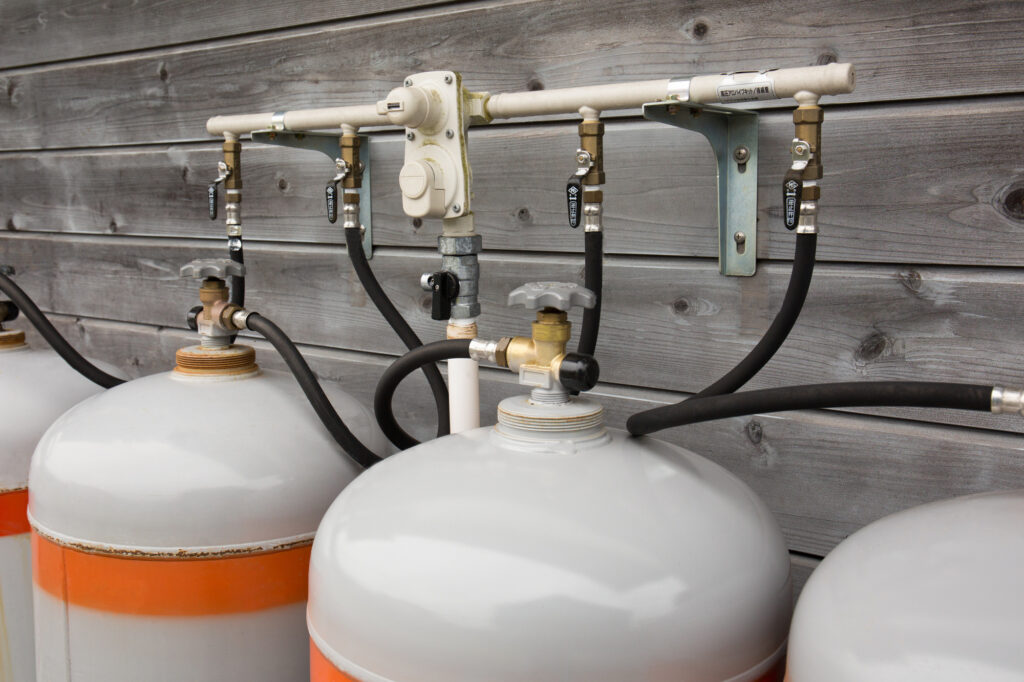
What Happens To Propane Tanks In High Temperatures?
When a propane tank is exposed to high heat, several things occur:
- Propane expands inside the tank, increasing pressure.
- The pressure relief valve (a small safety device) releases extra gas if pressure gets too high.
- If the tank is overfilled or the valve is blocked, pressure can build up to dangerous levels.
Most tanks do not explode. Instead, you may hear a hissing sound as the valve releases gas. This is a safety feature and not a sign of an immediate explosion.
How Hot Is Too Hot For Propane Tanks?
Propane tanks are tested for high heat, but there are limits. Here’s a comparison of common temperatures and what they mean for propane tanks:
| Temperature | Effect on Propane Tank |
|---|---|
| 70–90°F (21–32°C) | Normal operation, safe range |
| 100–120°F (38–49°C) | Pressure rises, but tank is still safe |
| 150°F (65°C) and above | Pressure relief valve may open |
| Over 200°F (93°C) | Tank could fail if safety devices don’t work |
For comparison, the temperature inside a closed car on a hot day can reach 130–170°F (54–77°C). That’s why you should never leave a propane tank in a car.
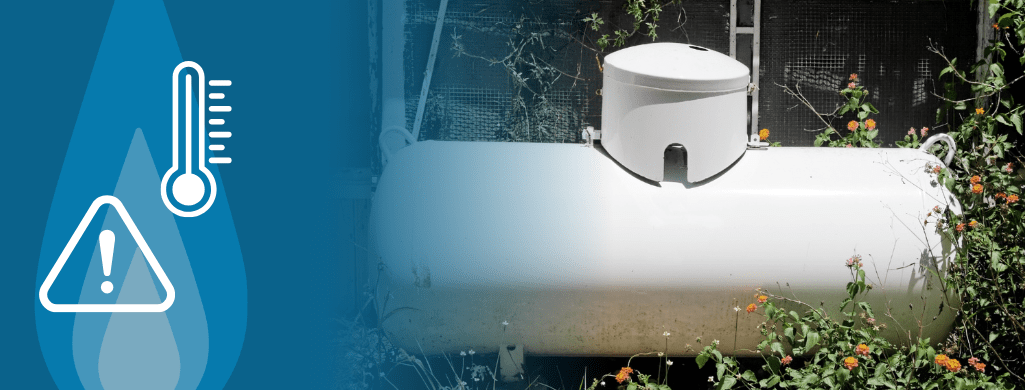
Propane Tank Safety Features
Propane tanks have several built-in safety features:
- Pressure relief valve: Releases gas if pressure gets too high.
- Overfill prevention device (OPD): Prevents the tank from being filled too much.
- Thick steel walls: Tanks are made from strong metal to handle high pressure.
- Color: Most tanks are painted light colors to reflect heat.
These features are why explosions are extremely rare.
What Causes Propane Tank Explosions?
Most propane tank explosions happen because of misuse, not just heat. Here are the main causes:
- Fire exposure: If a tank is caught in a fire, the heat can cause the metal to weaken and the tank to burst.
- Overfilling: Too much propane leaves no room for expansion, increasing the risk if the tank heats up.
- Blocked or damaged relief valve: If the valve cannot release pressure, the tank can fail.
- Physical damage: Dropping, denting, or hitting the tank can weaken it.
- Leaking gas and ignition: If gas leaks and finds a flame or spark, it can cause an explosion.
Real-world Data: How Often Do Propane Tanks Explode?
You might be surprised how rare propane explosions are. According to the National Fire Protection Association (NFPA), only a small fraction of propane-related fires involve an actual tank explosion. Most incidents involve leaks or improper use.
Every year, there are about 600 propane tank-related accidents in the United States, but most do not result in explosions. Fires, leaks, and burns are more common than blasts.
Here’s a quick look at propane accident types:
| Incident Type | Percentage of Cases |
|---|---|
| Gas Leaks (no fire) | 60% |
| Fires (no explosion) | 30% |
| Tank Explosions | 2–3% |
| Other (burns, injuries) | 7–8% |
So, the chance of a propane tank exploding just from heat is very low.
Where Should You Store Propane Tanks In Hot Weather?
The way you store propane tanks matters more than the weather itself. Here are some simple rules:
- Keep tanks outdoors in a shaded, well-ventilated area.
- Never store tanks in a garage, shed, or inside your house.
- Do not leave tanks in closed vehicles.
- Keep tanks away from sources of heat, like grills, fire pits, or direct sunlight for long periods.
If you need to store a tank for a long time, keep it upright and on a flat surface. Make sure the valve is closed tightly.
Common Myths About Propane Tanks And Heat
Many people believe propane tanks will explode easily in the sun. That’s a myth. Here are some common misunderstandings:
- Myth 1: “Tanks will blow up if left in the sun.”
Fact: Tanks are designed for outdoor use and can handle sunlight.
- Myth 2: “Any heat will make a tank explode.”
Fact: Tanks only explode if safety features fail and the tank gets extremely hot.
- Myth 3: “All propane tanks are dangerous.”
Fact: When used correctly, propane tanks are very safe.
What To Do If You Hear A Hissing Sound From Your Propane Tank
If you ever hear a hissing sound from your tank, it’s likely the pressure relief valve doing its job. Here’s what to do:
- Move away from the tank.
- Keep flames and sparks away.
- Do not try to close the valve.
- Call your local fire department or propane supplier for help.
Most of the time, the valve will stop hissing when the pressure drops to a safe level.
Signs Of A Propane Leak Or Danger
Knowing what to watch for can help you avoid a problem:
- Smell of rotten eggs (added odor to propane)
- Hissing sound (gas escaping)
- Frost on tank or valve
- Dead plants near the tank (if buried)
If you notice any of these, move to safety and call for help.
How To Reduce The Risk Of Propane Tank Explosion
You can do a lot to keep your propane tanks safe:
- Inspect regularly: Check for rust, dents, or leaks.
- Store properly: Keep tanks upright, outdoors, and out of cars.
- Don’t overfill: Use certified suppliers who know the rules.
- Keep away from flames: Store tanks away from anything that gets hot.
- Replace old tanks: Most tanks have a lifespan of 10–12 years.
One tip many people miss: Never paint your tank a dark color. Dark paint makes the tank absorb more heat, which raises the pressure inside.
Another important detail: Always transport tanks upright, even if they seem empty. Laying them down can cause liquid propane to reach the valve, increasing risk.
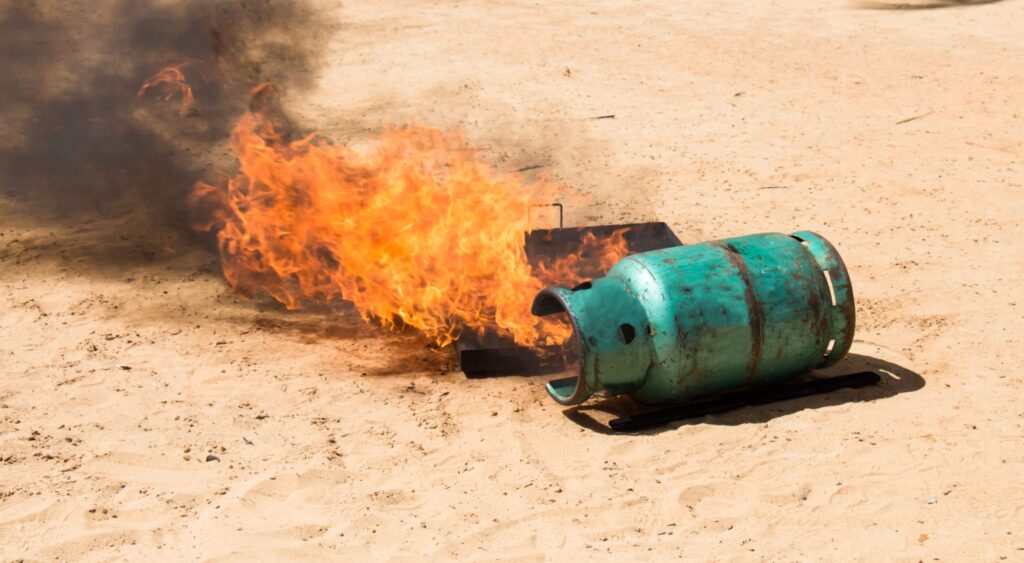
Propane Tank Explosion Vs. Bleve: What’s The Difference?
You might hear about a BLEVE (Boiling Liquid Expanding Vapor Explosion). This is a technical term for what happens if a tank fails in a fire. In a BLEVE, the tank’s metal weakens from extreme heat, the pressure gets too high, and the whole tank bursts suddenly. This is very rare in normal outdoor conditions and usually only happens if the tank is in a building or car fire.
Comparing Propane To Other Fuels In Heat
How does propane compare to other common fuels like gasoline or natural gas? Here’s a quick look:
| Fuel Type | Explosion Risk in Heat | Main Safety Feature |
|---|---|---|
| Propane | Low (with safety features) | Pressure relief valve, OPD |
| Gasoline | Higher (vapors ignite easily) | Sealed container |
| Natural Gas | Low (disperses quickly) | Odor added, leak detection |
Propane is actually safer than gasoline when stored and used properly.
When To Replace Or Dispose Of A Propane Tank
Most people overlook this: Propane tanks have an expiration date. In the US, tanks must be recertified or replaced every 12 years from their manufacture date. Check the collar of your tank for a stamped date. If your tank is old, rusty, or damaged, take it to a certified recycling center or your propane supplier.
Never throw a tank in the trash, as it can be dangerous in landfills.
What To Do In Case Of Propane Tank Fire Or Explosion
If you witness a fire involving a propane tank:
- Call 911 immediately.
- Move away from the area.
- Warn others to stay clear.
- Do not try to put out the fire yourself.
Firefighters are trained to deal with propane tanks and can cool the tank with water until the pressure is safe.
Where To Learn More About Propane Safety
For more details on propane safety and accident statistics, visit the NFPA Propane Safety page.
Frequently Asked Questions
Can Propane Tanks Explode If Left In The Sun?
Not under normal conditions. Propane tanks are designed to handle sunlight and outdoor temperatures. Explosions are extremely rare and usually happen only if the tank is overfilled, damaged, or exposed to fire.
Is It Safe To Store A Propane Tank Outside In Summer?
Yes, it is safe if you keep the tank upright, in a shaded spot, and away from direct heat sources. Never store a tank indoors or in a closed vehicle.
What Should I Do If I Smell Propane Near My Tank?
Leave the area immediately. Do not use electrical switches or create sparks. Call your propane supplier or fire department from a safe location.
How Do I Know If My Propane Tank Is Too Old To Use?
Check the manufacture date on the tank collar. If it’s more than 12 years old, have it inspected or replaced by a certified supplier.
Can A Propane Tank Explode In A Hot Car?
There is a small risk. Temperatures in a closed car can rise quickly, causing pressure to build up. Never leave a propane tank in a vehicle, especially on hot days.
Propane tanks are safe when used and stored properly, even in hot weather. Understanding the risks and following simple safety tips will keep you and your family protected all year round.