Many people find themselves in the middle of a recipe, only to realize they are out of baking soda or cream of tartar. If you need a substitute for both, don’t worry—there are practical alternatives that work well in most baked goods. The right replacement depends on what you are baking and what ingredients you have. Understanding how these two common leavening agents work will help you choose the best option for your needs.
The Solution: Must-Haves for Perfect Leavening
If you find yourself frequently hunting for substitutes, it’s usually because your leavening agents have expired or lost their potency. Here are the pantry staples that professional bakers swear by for consistent results.
Product Why it’s the Best Substitute Solution Key Feature Rumford Aluminum-Free Baking Powder Best Overall. Double-acting formula ensures a reliable rise every time. No metallic aftertaste; Non-GMO. McCormick Culinary Cream of Tartar Best for Bulk Bakers. High-purity acid for stabilizing egg whites and snickerdoodles. 25oz value size; shelf-stable for years. Arm & Hammer Baking Soda The Gold Standard. Essential for neutralizing acids in cocoa or buttermilk. Pure sodium bicarbonate; multi-purpose.
What Is A Substitute For Baking Soda And Cream Of Tartar?
The best substitute for both baking soda and cream of tartar is baking powder. If you have no baking powder, you can use self-rising flour or certain combinations of other pantry items, though results may vary. Each alternative has its strengths and limitations, depending on your recipe.
Baking powder is essentially a mix of baking soda and cream of tartar, plus a bit of starch. This means it provides both the alkaline and acidic elements your recipe needs to rise, making it the most direct substitute.
Baking Powder: The Most Reliable Substitute
Baking powder is the first choice when you have neither baking soda nor cream of tartar. It is designed to replace both, so you don’t need to adjust your recipe much.
- How to use: Replace each 1/4 teaspoon of baking soda + 1/2 teaspoon of cream of tartar with 1 teaspoon of baking powder.
- Why it works: Baking powder contains both the acid (cream of tartar) and the base (baking soda) in balanced amounts.
- Best for: Cakes, muffins, pancakes, and cookies.
Example:
If a recipe calls for 1 teaspoon baking soda and 2 teaspoons cream of tartar, use 4 teaspoons baking powder instead.
Tip: Baking powder is weaker than baking soda, so you usually need more. This may slightly change the taste or texture. Monitor your baked goods the first time you try this swap.
What Can I Use Instead of Cornstarch to Thicken Soup? – 13 Easy Alternatives
Self-rising Flour As A Substitute
Self-rising flour is regular flour with baking powder and salt already mixed in. This makes it a convenient substitute, especially for recipes like biscuits, pancakes, and some cakes.
- How to use: Replace all-purpose flour, baking soda, and cream of tartar in your recipe with self-rising flour. Omit any extra salt.
- Ratio: For every cup of all-purpose flour plus 1 to 1.5 teaspoons baking powder (the equivalent of baking soda + cream of tartar), use 1 cup self-rising flour.
Example:
A pancake recipe calls for 2 cups flour, 2 teaspoons baking soda, and 4 teaspoons cream of tartar. Substitute with 2 cups self-rising flour and omit both baking soda and cream of tartar.
Note: Self-rising flour is not ideal for recipes needing high gluten (like yeast breads) or where leavening amount must be exact.
Yogurt And Baking Powder Combination
If you have plain yogurt and baking powder, this combination can replace baking soda and cream of tartar in some recipes, especially when you want a tender crumb.
- How to use: For every 1/2 teaspoon baking soda + 1 teaspoon cream of tartar, use 1.5 teaspoons baking powder and replace some of the liquid with 1/4 cup plain yogurt.
- Why it works: Yogurt adds acidity, helping the baking powder work. It also adds moisture.
Example:
If your cake calls for 1 teaspoon baking soda and 2 teaspoons cream of tartar, use 3 teaspoons baking powder and swap 1/2 cup of the recipe liquid with 1/2 cup yogurt.
Practical tip: Reduce other liquids slightly to keep the batter consistency.
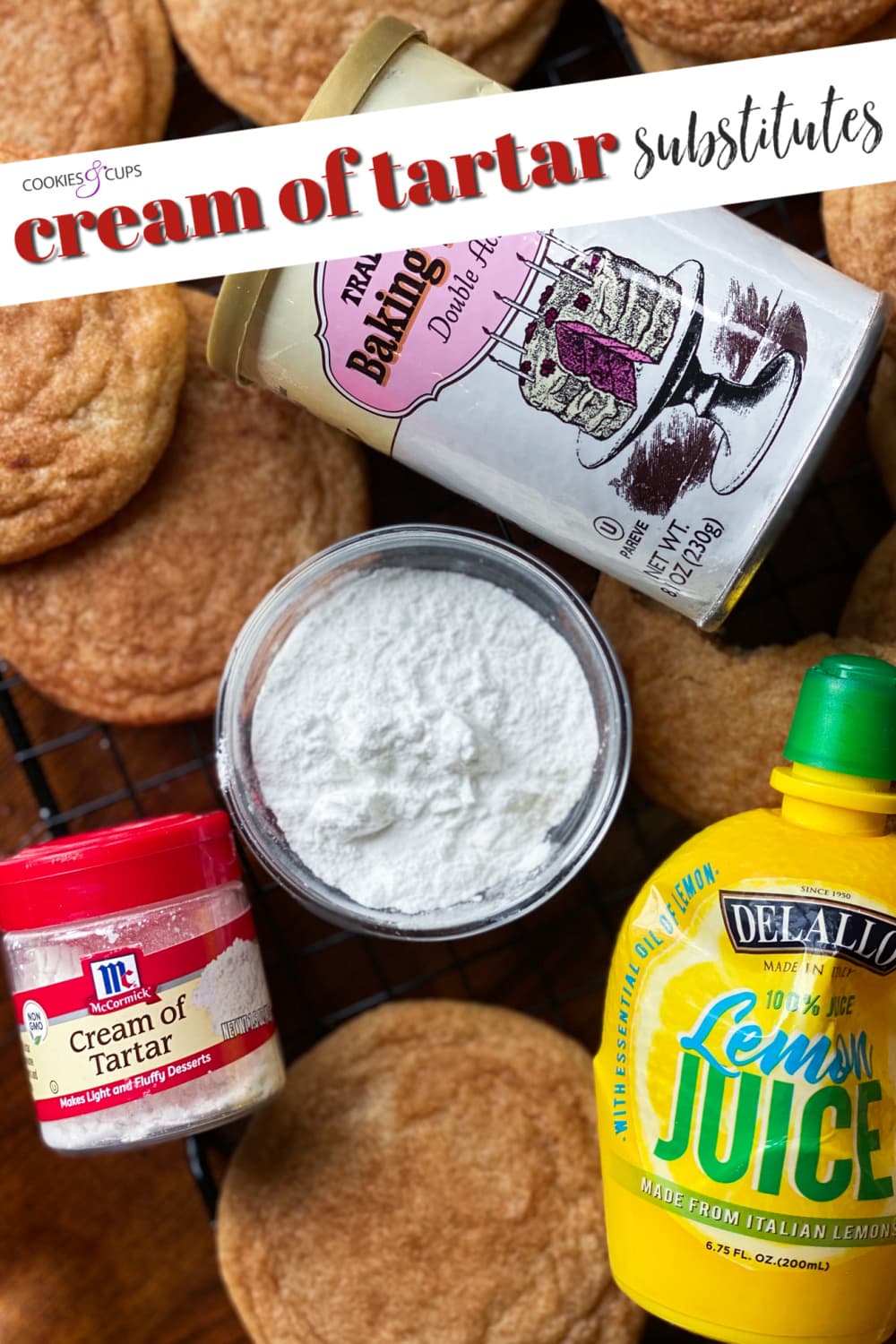
Credit: cookiesandcups.com
Lemon Juice And Baking Powder
Lemon juice is another acidic ingredient that can activate baking powder and replace cream of tartar’s role.
- How to use: For each 1/2 teaspoon baking soda + 1 teaspoon cream of tartar, use 1.5 teaspoons baking powder and 1 tablespoon lemon juice.
- Best for: Recipes where a lemon flavor is welcome, like cakes, muffins, and some cookies.
Example:
A muffin recipe calls for 1 teaspoon baking soda and 2 teaspoons cream of tartar. Replace with 3 teaspoons baking powder and add 2 tablespoons lemon juice.
Tip: Lemon juice can lighten the flavor and color of your baked goods, so test with a small batch if you’re unsure.
Vinegar And Baking Powder
Vinegar (white or apple cider) can replace cream of tartar’s acidity, working with baking powder to create a similar leavening effect.
- How to use: For every 1/2 teaspoon baking soda + 1 teaspoon cream of tartar, use 1.5 teaspoons baking powder and 1 tablespoon vinegar.
- Best for: Chocolate cakes, brownies, or recipes where a slight vinegar taste will not clash.
Example:
If you need to substitute 1 teaspoon baking soda and 2 teaspoons cream of tartar, use 3 teaspoons baking powder and 2 tablespoons vinegar.
Note: Add vinegar with the wet ingredients for best results.
Buttermilk And Baking Powder
Buttermilk is naturally acidic and works well with baking powder to create lift.
- How to use: For each 1/2 teaspoon baking soda + 1 teaspoon cream of tartar, use 1.5 teaspoons baking powder and reduce the recipe’s liquid by 1/4 cup, replacing it with 1/4 cup buttermilk.
- Best for: Pancakes, waffles, and quick breads.
Example:
For a recipe with 1 teaspoon baking soda and 2 teaspoons cream of tartar, swap with 3 teaspoons baking powder and 1/2 cup buttermilk (reduce other liquid by 1/2 cup).
Insight: Buttermilk gives a slight tang and tender texture.
Comparing Substitutes: Effectiveness And Flavor
To help you see how these substitutes compare, here’s a summary:
| Substitute | Main Ingredients Needed | Best For | Flavor Impact |
|---|---|---|---|
| Baking Powder | Baking powder | All baked goods | Neutral |
| Self-Rising Flour | Self-rising flour | Biscuits, pancakes | Slightly salty |
| Yogurt & Baking Powder | Yogurt, baking powder | Cakes, muffins | Creamy, tangy |
| Lemon Juice & Baking Powder | Lemon juice, baking powder | Cakes, muffins | Lemony |
| Vinegar & Baking Powder | Vinegar, baking powder | Chocolate cakes, brownies | Neutral to slight tang |
| Buttermilk & Baking Powder | Buttermilk, baking powder | Pancakes, waffles | Tangy, moist |
What can I use instead of heavy cream in pasta sauce?– 5 Delicious Substitutes
When To Avoid Substitutes
Not every substitute fits every recipe. Here are times you should avoid alternatives:
- Delicate meringues: Cream of tartar stabilizes egg whites better than most acids. Substitutes may not give the same volume.
- Recipes with exact textures: Some cookies, soufflés, or macarons rely on precise chemistry. Substitutes can change texture.
- Gluten-free baking: Self-rising flour may not be gluten-free.
If you want the best results in these recipes, wait until you have the original ingredients.
Common Mistakes When Substituting
Using substitutes seems easy, but some common errors can ruin your baked goods:
- Ignoring ratios: Baking is precise. Always measure substitutes carefully.
- Not adjusting liquids: Yogurt, buttermilk, and lemon juice add moisture. Reduce other liquids in your recipe.
- Over-mixing: Some substitutes (like buttermilk or yogurt) can make batter tough if over-mixed.
- Skipping salt adjustment: Self-rising flour contains salt. Omit added salt or your result will be too salty.
How These Substitutes Affect Texture And Rise
Substitutes do more than change taste—they also affect how your baked goods rise and feel. For example:
- Baking powder gives a gentler, even rise compared to baking soda and cream of tartar.
- Yogurt and buttermilk tend to make cakes moist and soft.
- Self-rising flour may produce denser results if used incorrectly.
- Vinegar and lemon juice can make batters lighter but sometimes add a tangy flavor.
Here’s a quick comparison:
| Substitute | Rise Strength | Texture Effect |
|---|---|---|
| Baking Powder | Medium | Light, even crumb |
| Yogurt/Buttermilk + Baking Powder | Medium-High | Moist, tender |
| Self-Rising Flour | Medium | Slightly dense |
| Lemon Juice/Vinegar + Baking Powder | Medium | Light, sometimes tangy |
Two Non-obvious Insights About Substitutes
- Aluminum-free baking powder makes a difference: Many baking powders contain aluminum, which can give a metallic taste, especially when using extra amounts as a substitute. If possible, choose an aluminum-free product for better flavor.
- Order of mixing matters: When using acidic liquids like lemon juice or vinegar, add them at the very end, just before baking. This ensures the leavening reaction happens in the oven, not in the bowl.
Understanding Why Substitutes Work
Both baking soda and cream of tartar are leavening agents. Baking soda is a base, and cream of tartar is an acid. When combined, they produce carbon dioxide gas, which helps baked goods rise.
- Baking powder is a pre-mixed combination of these two, making it the simplest substitute.
- Acidic liquids (like yogurt, buttermilk, lemon juice, or vinegar) can replace cream of tartar’s acidity and activate baking powder or soda.
- Self-rising flour just combines flour, baking powder, and salt for ease of use.
Understanding this chemistry helps you swap ingredients with confidence.
When Substitutes Don’t Work
There are times when none of these options will produce the same result as baking soda and cream of tartar. For example, some traditional recipes (like angel food cake or snickerdoodle cookies) rely on the unique reaction of these two.
In these cases, the texture, flavor, or rise may suffer.
If you’re baking for a special occasion, try to get the real ingredients for perfect results.
External Resource
For more about the science behind leavening agents, visit Wikipedia’s Baking Powder page.
Frequently Asked Questions
What Is The Best Substitute For Baking Soda And Cream Of Tartar In Cookies?
Baking powder is the most reliable substitute for both baking soda and cream of tartar in cookies. Use 1 teaspoon of baking powder for every 1/4 teaspoon baking soda plus 1/2 teaspoon cream of tartar the recipe calls for. This keeps cookies light and chewy.
Can I Use Lemon Juice Instead Of Cream Of Tartar And Baking Soda?
You can use lemon juice with baking powder to replace both baking soda and cream of tartar. Add 1.5 teaspoons baking powder and 1 tablespoon lemon juice for every 1/2 teaspoon baking soda and 1 teaspoon cream of tartar. Note that lemon juice will add a citrus flavor.
Is Self-rising Flour A Good Substitute For Baking Soda And Cream Of Tartar?
Yes, self-rising flour can substitute for both, especially in recipes like pancakes, biscuits, and cakes. Replace the regular flour plus the leavening agents with an equal amount of self-rising flour and omit extra salt.
Will Using Substitutes Change The Taste Of My Baked Goods?
Some substitutes, like yogurt, buttermilk, lemon juice, or vinegar, may add tangy or subtle flavors. Baking powder and self-rising flour are more neutral but may change the texture slightly. Always test with a small batch if you’re unsure.
What If I Have No Baking Powder, Soda, Or Cream Of Tartar?
If you have none of these, you can try using club soda as part of your recipe liquid in pancakes or waffles, as it contains some leavening. However, it won’t be as effective as the other substitutes and may not work for all recipes.
Finding a substitute for baking soda and cream of tartar is easier than it seems. With options like baking powder, self-rising flour, and acidic liquids, you can keep baking without a trip to the store. Knowing how to adjust your recipe will help you get great results, even with what you have on hand.
Keep these tips in mind and experiment confidently—the best bakers know how to adapt.

Credit: worldofprintables.com