Deep fried turkey delivers a crisp, flavorful crust; oven roasted gives steady, moist, traditional results.
I have cooked and tested many turkeys over a decade. I know the strengths and limits of deep fried turkey vs oven roasted methods. This article compares taste, texture, safety, time, cost, and health. Read on to pick the right method for your next feast, and learn practical tips I use in my kitchen.

How to Cook Whole Fish in a Roaster Oven – Perfectly Tender Every Time
Why compare deep fried turkey vs oven roasted
Choosing between deep fried turkey vs oven roasted is about trade-offs. Each method changes skin, meat texture, and cooking risks. Deep frying gives rapid heat, a crunchy skin, and a smoky aroma. Oven roasting gives steady heat, predictable doneness, and classic flavor. Knowing differences helps you match method to goals like speed, safety, or diet.

Flavor and texture: what to expect with each method
Deep fried turkey vs oven roasted differs most in mouthfeel and skin.
Deep fried turkey
- Skin becomes very crisp in minutes.
- Meat near the skin stays juicy due to quick sealing.
- Flavor has a toasted, slightly caramelized note from hot oil.
Oven roasted turkey
- Skin crisps more slowly and can be evenly browned.
- Heat penetrates steadily, giving uniform doneness.
- Flavor develops with browning and aromatics from herbs and drippings.
Examples
- A deep fried turkey often tastes richer on the first bite.
- An oven roasted turkey offers layers of flavor from stuffing, butter, and low heat.

Safety and cooking considerations
Safety is where deep fried turkey vs oven roasted diverge sharply.
Deep fried turkey safety
- Use an outdoor fryer on a flat surface.
- Thaw completely and fully dry the bird to prevent oil boil-over.
- Keep a long-handled thermometer and safety gear.
- Never fry inside a garage or on a wooden deck.
Oven roasted safety
- Standard kitchen oven use has low external risk.
- Monitor internal temperature with a probe thermometer.
- Avoid stuffing hot turkey; Cook stuffing separately for safety.
Practical temps and steps
- Aim for 165°F (74°C) in the thickest part of the thigh for both methods.
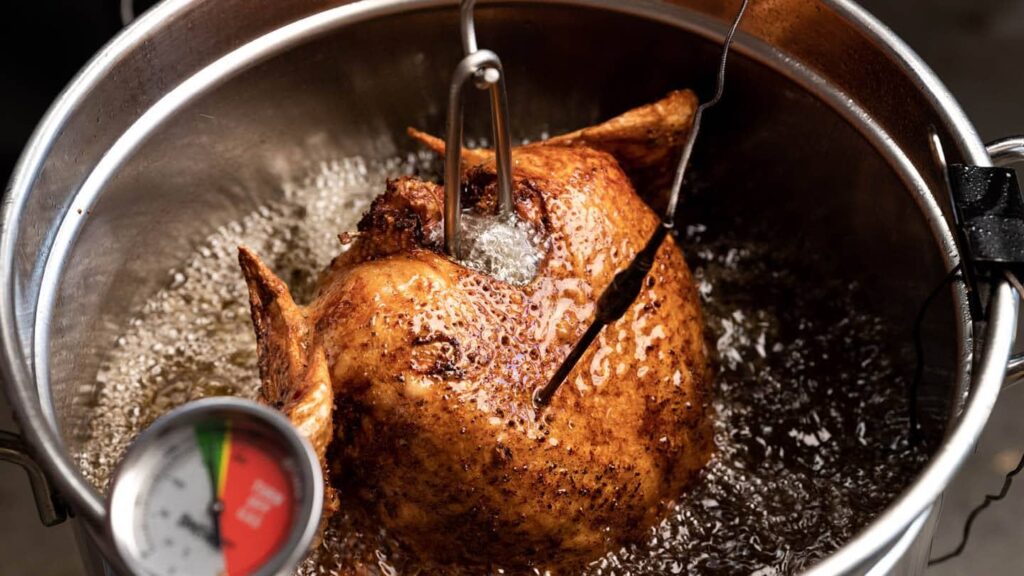
- For deep frying, preheat oil to about 350°F (175°C).
- For oven roasting, start at higher heat for color, then lower to finish.
Time, equipment, and cost
Time, gear, and budget often decide which method to pick.
Deep fried turkey
- Time: 3 to 5 minutes per pound when oil is at temp.
- Equipment: large propane fryer, thermometer, oil drain setup.
- Cost: higher initial gear and oil costs; oil reusable but heavy expense up front.
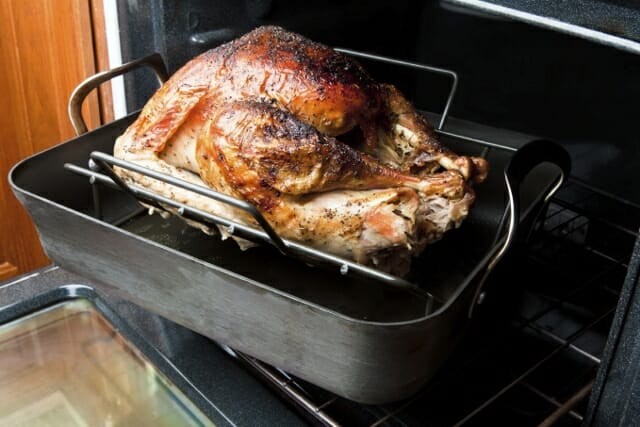
Oven roasted turkey
- Time: 13 to 20 minutes per pound at 325°F depending on size.
- Equipment: oven, roasting pan, rack, thermometer.
- Cost: low additional cost, uses common kitchen tools.
Which is faster and cheaper
- Deep frying is faster for large gatherings but costlier in gear and oil.
- Oven roasting costs less and fits kitchens without extra setup.

Health and nutrition
Health considerations shape the deep fried turkey vs oven roasted choice.
Fat and calories
– Deep fried turkey can pick up surface oil, raising calories and fat modestly.
- Oven roasted turkey tends to be leaner if you avoid heavy butter or basting fats.
Sodium and additives
- Brines and injectables add sodium regardless of method.
- Choose low-sodium brines and use herbs for flavor to control salt.
Practical health tips
- Let the turkey rest and drain any excess oil on a rack.
- Remove skin to reduce fat intake at the plate.
- Use healthier oils with higher smoke points for frying, and moderate basting butter for roasting.

How to choose: decision factors
Ask simple questions to pick deep fried turkey vs oven roasted.
Consider these factors
- Space: Do you have an open outdoor area for frying?
- Crowd size: Need speed for many guests? Frying is faster.
- Safety comfort: Are you comfortable handling hot oil?
- Flavor preference: Want ultra-crispy skin or classic roast notes?
- Health concerns: Prefer lower added fat? Roasting is usually better.
Quick recommendation
- For dramatic texture and speed pick deep fried turkey.
- For low-risk, classic flavor pick oven roasted.
- For first-timers, practice on a smaller bird or try spatchcock roasting as a middle ground.

Personal experience and tested tips
I have cooked dozens of turkeys using both methods. I learned practical lessons the hard way.
Lessons learned
- Always thaw fully before frying. I once had an oil boil-over that ruined a holiday. That taught me thorough prep matters.
- Use a probe thermometer for accurate readings. Guessing leads to dry meat.
- Brine helps both methods. I prefer a light brine with citrus and bay. It keeps the meat juicy during roasting and enhances crispiness when frying.
Practical tips I use
- Pat the bird completely dry before frying.
- Preheat oil and use a scale or marked rope to lower the bird slowly.
- For oven roasted turkey, start at 425°F for 30 minutes, then reduce to 325°F to finish.
- Rest the turkey 20 minutes before carving to keep juices locked.

People also ask (short answers)
Will deep fried turkey vs oven roasted taste very different?
Yes. Deep fried turkey has a crisp, slightly toasted flavor. Oven roasted develops layered, savory notes from long roasting.
Which method makes the juiciest meat?
Deep frying seals the skin quickly and often yields very juicy breast meat. Proper roasting and brining can produce equally juicy results.
Can I brine a turkey before frying?
Yes. Brining works for both methods but dry the bird well before frying to avoid oil hazards.
Frequently Asked Questions of deep fried turkey vs oven roasted
What temperature should I fry a turkey at?
Maintain oil at about 350°F (175°C). Use a reliable thermometer and adjust heat to keep it steady.
How long does oven roasted turkey take per pound?
Roast roughly 13 to 20 minutes per pound at 325°F, depending on whether the bird is stuffed and oven performance.
Is deep frying a healthier option than roasting?
No. Deep frying usually adds surface oil and calories. Roasting tends to be leaner when you limit added fats.
Can I use the same brine for frying and roasting?
Yes. The same brine formula works for both. Just ensure the turkey is fully dry before frying.
Is it safe to fry a turkey indoors?
No. Frying indoors is dangerous. Always fry outdoors on a flat, non-flammable surface away from structures.
How do I prevent dry breast meat when roasting?
Brine the bird, monitor temperature closely, and remove it from heat at 165°F. Rest the turkey before carving.
Conclusion
Both deep fried turkey vs oven roasted offer great results. Deep frying gives speed and crisp skin. Oven roasting gives control and classic flavor. Pick the method that matches your space, skill, and guest needs. Try one method on a small bird before a big event. Share your results and questions below, or subscribe for more tested tips and recipes.