Yes, you can clean your mattress with a steam cleaner, but only if the manufacturer allows it and you use low moisture. High heat kills dust mites and bacteria, yet too much water causes mold inside the foam.
This guide covers the safe settings, step-by-step method, and drying times to protect your bed. It explains how to avoid common mistakes that ruin mattresses. You’ll learn exactly when to skip steam and choose dry cleaning instead. The focus is on safety and effectiveness for non-native speakers.
What is mattress steam cleaning?
Steam cleaning uses hot vapor to sanitize fabric without harsh chemicals. The high temperature kills dust mites, bed bugs, and bacteria deep in the fibers. It’s ideal for people with allergies or asthma who need a hygienic sleep surface. However, it isn’t suitable for every mattress type.
Memory foam and latex are very sensitive to heat and moisture. Excessive water can break down the foam structure, causing sagging and permanent damage.
Many people believe steam cleans by soaking the dirt away. This is a myth. Steam works through heat, not saturation. The goal is to kill organisms, not wash the fabric like clothes. If you soak the mattress, you create a breeding ground for mold.
Mold grows quickly in dark, damp places. This poses a serious health risk. Always check your warranty first. Some brands void the warranty if liquid penetrates the cover. Knowing that steam sanitizes through heat rather than saturation protects you from costly repairs. You must balance sanitation with material care.
How to steam clean safely
Follow these steps to clean your mattress without causing damage. Precision matters more than speed here. Each step protects the internal layers from excess moisture.
- Strip the bed completely. Remove all sheets, pillows, and protectors. Wash these items in hot water separately. This ensures you don’t put dirty linens back on a clean surface.
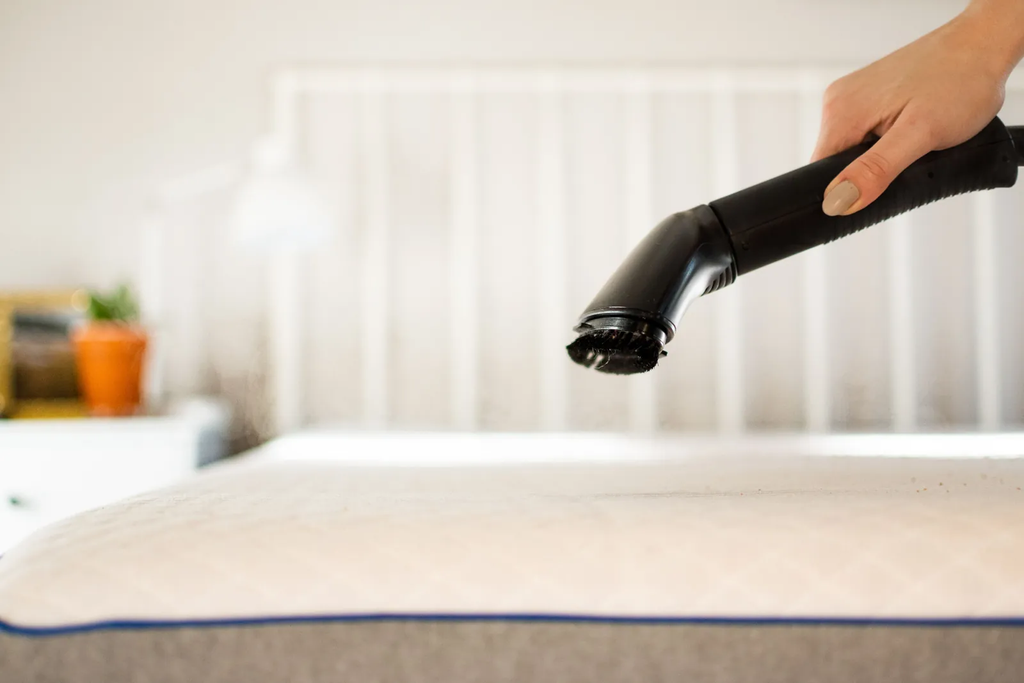
- Vacuum the entire mattress thoroughly. Use the upholstery attachment. Pay special attention to seams and edges where dust accumulates. This removes loose debris before applying heat.
- Check the manufacturer’s label. Look for cleaning codes. If it says “don’t wet” or “dry clean only,” stop immediately. Steam introduces moisture, which violates these instructions.
- Fill your steam cleaner with distilled water. Tap water leaves mineral deposits that stain fabric over time. Distilled water is pure and safe for delicate fibers.
- Test a small, hidden area first. Apply steam for three seconds. Wait ten minutes. Check for discoloration or texture changes. If the fabric reacts poorly, don’t proceed.
- Steam the surface in slow, overlapping passes. Hold the nozzle one inch above the fabric. Don’t press down hard. Move at a rate of one foot per five seconds. This limits moisture intake.
- Allow the mattress to dry completely. Use fans and open windows. This takes at least four to six hours. Don’t make the bed until the surface is bone dry.
The key judgment call is moisture control. If the fabric feels damp to the touch after steaming, you used too much water.
Blot it immediately with a dry towel. Then increase airflow. If you ignore this sign, water seeps into the core. This leads to mold growth within 24 hours.
Mold spores are invisible but dangerous. Your nose will detect a musty smell later, but by then, the damage is done. Controlling moisture during steaming is the only way to avoid this outcome.
Key numbers and settings
These figures help you adjust your technique based on your equipment and mattress type. Different materials react differently to heat. Always prioritize the manufacturer’s specific guidelines over general advice.
| Situation | What to use | How long | What to watch for |
|---|---|---|---|
| Standard innerspring mattress | Low steam setting | 2-3 hours drying | Damp spots near seams |
| Memory foam mattress | Minimal steam or none | 4-6 hours drying | Softening or warping foam |
| Latex mattress | Dry vacuum only | N/A | Discoloration from heat |
| Heavy soiling | Pre-treat with enzyme cleaner | 6+ hours drying | Residue left behind |
| High humidity room | Dehumidifier + fans | 8+ hours drying | Musty odor developing |
Note that memory foam is particularly vulnerable. Heat breaks down the viscoelastic properties. If your mattress is under warranty, check if steam cleaning voids it. Many companies require professional cleaning for claims. For latex, avoid steam entirely. Latex degrades with heat and moisture.
Stick to vacuuming and spot cleaning. In high humidity, drying takes longer. Use a dehumidifier to speed up the process. Without it, mold risk increases significantly. These times assume good airflow. If air is still, add two extra hours.
6 Best Rated Home Carpet Steam Cleaner: With Pets, Kids, and Tough Stains
Tips for better results
Experienced cleaners prepare the room before they start. They also remove heavy furniture to improve air circulation. This simple step cuts drying time in half. Beginners often skip this and struggle with damp beds later.
Order matters. Always vacuum before steaming. If you steam first, you turn dust into mud. This mud settles into the fibers and creates new stains. Vacuuming lifts the dirt so the steam can sanitize the fabric directly. Check the nozzle temperature. It should be hot but not scalding. Too much heat scorches synthetic fibers. Synthetic blends melt easily. Natural cotton is more resilient but still needs care.
Leave the seams alone. Seams trap moisture. Steaming them directly pushes water into the core. Instead, steam around the seams lightly. Let the ambient heat sanitize the area. This prevents internal dampness. Also, don’t rush the drying phase. Touch the surface.
If it feels cool, it’s still wet. Coolness indicates evaporation is still happening. Only when it feels room temperature and dry is it safe to cover.
Fixing steam cleaning issues
Even with care, problems can occur. Here is how to handle common issues quickly.
| What you notice | What it usually means | What to do first |
|---|---|---|
| Musty smell | Mold or mildew growth | Increase airflow immediately; use dehumidifier |
| Water stains | Excess moisture penetration | Blot with dry towels; fan dry |
| Fabric shrinking | High heat damage | Stop steaming; let cool naturally |
| Lingering dampness | Poor ventilation | Add more fans; open windows |
| Discoloration | Mineral deposits or bleach | Use distilled water next time; blot now |
If you smell mold, act fast. Mold spreads quickly. Open all windows. Point fans directly at the mattress. Run a dehumidifier if you have one. If the smell persists after 24 hours, you may need professional remediation. Don’t ignore it. Health risks are real.
For water stains, blotting helps lift moisture out. Don’t rub, as this pushes water deeper. For shrinking fabric, you can’t reverse it. Prevent it by testing heat levels first. Always use distilled water to avoid mineral stains. Tap water contains calcium and magnesium, which leave white rings.
Safety rules and limits
The Environmental Protection Agency (EPA) notes that indoor moisture control is critical for preventing mold. EPA guide on mold prevention emphasizes keeping relative humidity below 60%. Steam cleaning raises local humidity significantly. You must manage this to stay safe.
Never steam a mattress that’s already wet or stained with urine. Heat sets the proteins in urine, making the stain permanent. For biological stains, use an enzyme cleaner instead. For biological stains, use an enzyme cleaner instead. Enzymes break down the organic matter without heat. Steam sets protein stains, making them impossible to remove.
If you have a hybrid mattress with coils, be cautious. Water can rust the coils over time. Rust weakens the support structure. Ensure the mattress is completely dry before putting sheets back. If you’re unsure about your mattress type, contact the manufacturer. Their guidance overrides general advice. Never use chemical detergents with steam unless the machine specifies it’s safe. Most home steamers are designed for water only. Adding soap can clog the machine and leave residue on the bed.
Aftercare and maintenance
Once the mattress is dry, protect your investment. Use a waterproof, breathable mattress protector. This barrier stops sweat and spills from reaching the fabric. It reduces the need for deep cleaning. Wash the protector monthly in hot water. This keeps the surface hygienic without stressing the mattress itself.
Vacuum the mattress surface as needed, since how often depends on use and the owner’s manual is the authority. This removes dust and skin cells before they accumulate. Rotate the mattress head-to-foot at intervals determined by your usage, following the owner’s manual as the authority.
This ensures even wear. If you live in a humid climate, consider using a dehumidifier in the bedroom. Keeping ambient humidity low prevents mold growth inside the bed.
Don’t strip the bed immediately after cleaning. Let the mattress air out for an hour. This ensures any residual moisture evaporates. Check the corners specifically. Corners trap air and dry last. If you feel any dampness, wait longer. Rushing this step ruins the cleaning effort. Proper aftercare extends the life of your mattress and keeps your sleep environment healthy.
When to skip steam
Steam isn’t the right choice for every situation. If your mattress is made of pure latex, don’t use steam. Latex is sensitive to high heat and moisture, which can damage the material. Use a vacuum and mild soap spot cleaning instead.
If the mattress has a visible tear or hole, avoid steam. Water will enter the core directly. This causes internal mold that you can’t see or clean. Repair the tear first or replace the mattress. Steam cleaning a damaged bed is a waste of time and money.
For old, heavily stained mattresses, steam may not work. Old stains are often set deep in the foam. Steam might refresh the surface but won’t remove the stain. In this case, professional extraction or replacement is better. Don’t expect miracles from a home steamer. It maintains hygiene but doesn’t restore old fabrics.
Frequently asked questions
Can I use a handheld steamer?
Yes, you can use a handheld steamer. It offers better control than large upright models. Keep the nozzle moving to avoid saturating one spot. Handheld units produce less steam, which is safer for memory foam. Just ensure the water tank is filled with distilled water.
How long does it take to dry?
It takes 4 to 6 hours to dry completely. This assumes good airflow and low humidity. Use fans to speed up the process. In humid conditions, it may take up to 8 hours. Never make the bed until it’s fully dry.
Is steam cleaning safe for allergies?
Yes, it’s very safe for allergies. The high heat kills dust mites and their waste. These are common allergy triggers. However, ensure the mattress is dry to prevent mold, which is another trigger. The combination of heat and dryness creates a hypoallergenic surface.
What happens if I use too much water?
If you use too much water, mold will grow inside. Mold causes health issues and bad odors. It also damages the mattress structure. Blot excess water immediately. Increase ventilation. If mold develops, you may need to replace the mattress.
Can I add essential oils to the steamer?
No, don’t add essential oils. Oils can clog the steamer’s internal mechanisms. They may also stain the mattress fabric. Some oils degrade foam over time. If you want a fresh scent, sprinkle baking soda after drying and vacuum it up.
Will steam remove urine stains?
No, steam won’t remove urine stains. Heat sets protein stains, making them permanent. Use an enzyme cleaner for urine. Enzymes break down the proteins without heat. Steam can be used afterward to sanitize, but only after the stain is gone.
Conclusion
Check your mattress tag before you start, and don’t rush the drying process. If it feels damp after cleaning, let it air out longer to prevent mold. You’ll keep your bed fresh and safe when you’re patient with moisture control.