
No, not all kitchen faucets are the same size, but most follow common standards that make replacements easier. Standard kitchen sinks typically use either single-hole, three-hole, or four-hole configurations, and faucet connections are usually 3/8-inch or 1/2-inch supply lines. Differences in faucet height, reach, and mounting style can affect compatibility. Always measure your sink holes and check the faucet specifications before buying to ensure a proper fit.
If you have ever tried to swap a faucet and hit a snag, you know why this topic matters. I’ve installed and replaced many faucets in real homes. In this guide, I’ll break down are all kitchen faucets the same size in plain terms. You’ll learn what “size” really means, how to measure, and how to choose a faucet that fits your sink, counter, and style without stress.

What “Size” Really Means For a Kitchen Faucet
When people ask, are all kitchen faucets the same size, they often think only of height. Size is more than that. It includes how the faucet mounts, how far the spout reaches, and the size of the connections.
Key parts that affect fit:
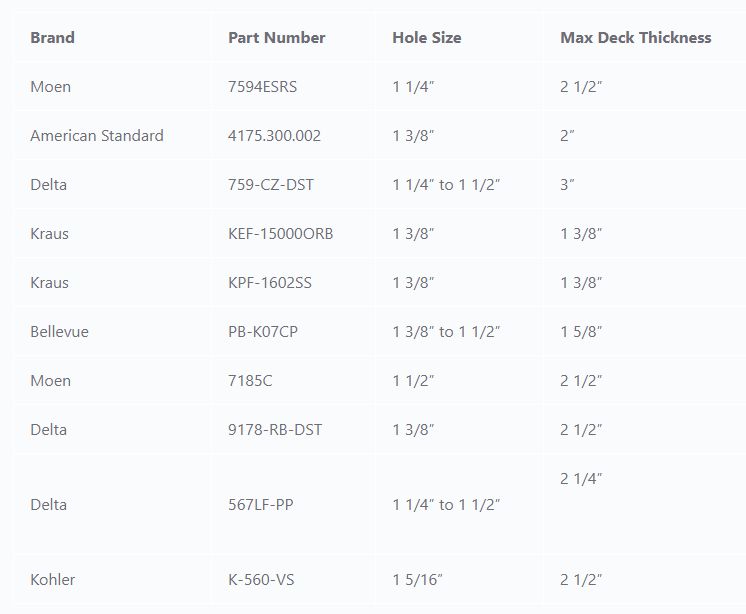
- Mounting hole size and number. Most kitchen sinks use a 1 3/8 inch hole, but not all.
- Hole spacing. Many three-hole kitchen sinks are on 8 inch centers. Old sinks can vary.
- Spout reach. The distance from the center of the faucet to the water stream.
- Spout height and total height. Needed for clearance under cabinets or shelves.
- Deck thickness. Thick stone may need a longer shank or a support plate.
- Water line size. Modern homes often use 3/8 inch compression. Older homes can be 1/2 inch.
So, are all kitchen faucets the same size? No. You need to match the whole setup, not just the look.
Standard Measurements You Should Know
If you wonder are all kitchen faucets the same size, these common ranges help set the frame.
Typical ranges in the US:
- Mounting hole diameter. About 1 3/8 inches (35 mm) is common.
- Hole count. Single hole, three hole, or four hole (with side sprayer or soap).
- Hole spacing. Many three-hole kitchen sinks use 8 inch spacing between hot and cold.
- Spout reach. Often 8 to 10 inches for full-size sinks.
- Spout height. Often 12 to 18 inches. Pull-down models can be taller.
- Deck thickness. Many faucets handle 1 1/2 to 2 1/2 inches. Check the spec sheet.
- Supply lines. 3/8 inch compression is common. Adapters can bridge to 1/2 inch stops.
- Flow rate. Many are 1.5 to 2.2 gpm, based on state rules and brand design.
These numbers vary by brand and model. That is why are all kitchen faucets the same size is not the right way to shop. Measure first, then choose.
Sink and Countertop Hole Configurations
Your sink layout sets the rules. If you ask, are all kitchen faucets the same size, think holes and spacing first.
Common setups:
- Single-hole. Clean, modern look. Many come with an escutcheon to cover extra holes.
- Three-hole. Often on 8 inch centers. Can use a base plate to adapt a single-hole faucet.
- Four-hole. Usually adds a side sprayer or soap dispenser.
- Deck thickness and material. Thick quartz or granite may need longer mounting hardware.
- Wall-mount. Needs different valves and rough-in. Not a swap for deck-mount without work.
Match the faucet to the sink holes you have or plan to drill.
The Big Fit Factors: Spout Reach, Spout Height, and Clearance
A faucet can “fit” the holes yet still work poorly if reach or height is off. This is where many people learn the hard way.
What to check:
- Spout reach. Aim the stream near the center of the main bowl. Too short, and you splash the back. Too long, and you hit the front.
- Spout height. Make sure pots fit. Also check cabinet shelves above.
- Handle swing. Some handles hit the backsplash. You need room to move from cold to hot.
- Pull-down clearance. Make sure the head docks cleanly without hitting a ledge.
From my installs, a reach around 9 inches works well for most double-bowl sinks. For small prep sinks, a reach near 6 to 8 inches is safer.
Connection Sizes and Valves
Size also lives under the sink. If you ask are all kitchen faucets the same size and think “yes,” connections prove you wrong.
What matters below:
- Shutoff valves. Many homes use 3/8 inch compression angle stops. Older places may have 1/2 inch IPS.
- Supply lines. Many faucets ship with 3/8 inch braided lines. Adapters can link to older valves.
- Deck support. Some sinks flex. A backing plate can help spread the load.
Use Teflon tape only on tapered threads, not on compression fittings. Hand-tight, then a quarter turn, is a good rule.
How to Measure Your Setup
Before asking are all kitchen faucets the same size, take five minutes to measure. It saves time, returns, and stress.
Steps:
- Count holes and measure spacing center to center.
- Measure the hole diameter if possible.
- Check deck thickness where the faucet mounts.
- Measure from the faucet center to the middle of the main bowl. That is your target reach.
- Measure backsplash distance. Make sure the handle can move fully.
- Measure vertical clearance under cabinets or shelves.
- Note the size of your shutoff valves and threads.
Write these down and keep them handy while you shop.
We also cover different types of recipes you may like.
Choosing the Right Faucet for Your Sink Type
The right size depends on the sink and how you use it. This is where the question are all kitchen faucets the same size meets real life.
Good matches:
- Single, large bowl. Taller pull-down, reach 9 to 10 inches, good for pots.
- Double bowl. Mid-height spout, reach around 8 to 9 inches, center the stream.
- Farmhouse or apron-front. Check height and reach. Many use tall arcs, but watch cabinet lines.
- Undermount. Ensure a wide base plate only if you need to cover extra holes.
- Bar or prep sink. Smaller body and shorter reach, often 6 to 8 inches.
From my jobs, the most common mistake is picking a tall arc with a short reach. It looks grand but misses the bowl.
Common Mistakes to Avoid
If you wonder are all kitchen faucets the same size and buy on looks, you may hit these traps.
Watch out for:
- Ignoring hole count and spacing. The base plate cannot fix every mismatch.
- Short reach. You end up splashing the back rim.
- Tall spout hitting a shelf or window sash.
- Handle hitting the backsplash in the hot position.
- Wrong connections. 3/8 to 1/2 inch adapters are cheap. Plan ahead.
- Deck too thick. Verify the max deck spec on the faucet.
A 60-second check now can save a weekend call to a plumber.
Maintenance, Future-Proofing, and Accessibility
Think about life after install. The answer to are all kitchen faucets the same size also ties to parts and service.
Smart choices:
- Ceramic disc valves for long life and smooth action.
- Brands with strong parts support and clear manuals.
- Standard 3/8 inch supplies for easy swaps later.
- ADA single-lever handles if you want easy use for all.
- An extra hole for filtered water or a soap pump if you have space.
Keep the install manual and model number. Future you will thank you.
Cost and Value Considerations
Size and price both matter. Still, a good fit beats a cheap return.
What affects cost:
- Material. Solid brass bodies last longer than zinc or plastic mix.
- Finish. PVD and stainless finishes resist spots and wear better.
- Features. Pull-down, magnetic docking, spray modes, and ceramic valves.
- Warranty. Many offer limited lifetime on function and finish.
- Labor. A pro install adds cost but avoids leaks and rework.
If you still ask are all kitchen faucets the same size, the price tags alone show they are not.
Are All Kitchen Faucets the Same Size? Key Takeaways
Let’s bring it home. Are all kitchen faucets the same size? No, and here is how to pick the right one.
Simple rules:
- Match hole count, hole size, and spacing before you shop.
- Choose spout reach that lands the stream near the bowl center.
- Check height and handle clearance for cabinets and backsplash.
- Confirm deck thickness and under-sink connection sizes.
- Keep adapters on hand for older shutoff valves.
Follow these, and the question are all kitchen faucets the same size stops being a headache. Your faucet will look right and work right.
Frequently Asked Questions of are all kitchen faucets the same size
Are all kitchen faucets the same size?
No. Faucets vary in hole count, reach, height, and connection sizes. You must match the faucet to your sink and plumbing.
What is the standard hole size for a kitchen faucet?
About 1 3/8 inches is common, but not universal. Always measure your sink or check the sink spec sheet.
Will a single-hole faucet fit a three-hole sink?
Yes, if the faucet includes an escutcheon plate that covers extra holes. Make sure the plate matches your hole spacing.
How do I know if the spout reach is right?
Measure from the faucet center to the bowl center. Pick a reach that drops water near that point to cut splash.
Can I connect a new faucet to old 1/2 inch valves?
Usually yes, with a 3/8 to 1/2 inch adapter. Check your faucet’s supply line size first.
Do tall pull-down faucets fit under cabinets?
Often they do, but measure from the counter to the cabinet bottom. Leave room for the handle swing and spray head.
Are wall-mount kitchen faucets a simple swap?
No. They need in-wall valves and correct rough-in spacing. Plan for plumbing work and drywall or tile repair.
Conclusion
Not all kitchen faucets are the same size, and that is good news. You can choose the look you love and still get a perfect fit. Measure holes, reach, height, and connections, then match the faucet to your space. Take your time, read the spec sheet, and you will install once and enjoy for years. Ready to pick the right model? Use the steps above, compare options, and share your questions or wins in the comments.