Preheat your roaster oven, season salmon, then bake to 125–145°F until flaky.
You want salmon that stays moist, cooks evenly, and feeds a crowd with no stress. I’ve baked salmon in roaster ovens for weeknight dinners and big potlucks. In this guide, I’ll show you how to bake salmon in a roaster oven with clear steps, pro tips, and foolproof temps. You’ll get flavor ideas, timing charts, and fixes for common mistakes so your salmon turns out perfect every time.
Why bake salmon in a roaster oven
A roaster oven is a gentle, steady heat source. It keeps moisture inside and reduces overcooking. That is ideal for salmon.
It frees up your main oven. You can roast veggies or make dessert at the same time. It is also easy to move and great for travel cooking.
The roaster insert holds large pieces. You can bake a full side of salmon for a party. Cleanup is fast since the cookwell lifts out.
Roaster ovens often cook a bit faster. The lid traps heat and steam. That helps keep salmon tender and flaky.
Tools and ingredients you need
You do not need much to get great results. Here is my setup:
- Roaster oven with a tight lid and a reliable dial
- Insert rack or shallow roasting pan that fits inside the cookwell
- Parchment paper or light oil to prevent sticking
- Instant-read thermometer for spot-on doneness
- Foil for tenting if the top browns too fast
- Salmon fillets or a whole side, skin-on if you can
- Olive oil or melted butter
- Salt, pepper, lemon, garlic, herbs, or your favorite spice blend
What Replaces Sesame Oil in Stir Fry – 10 Best Substitutes That Work
:max_bytes(150000):strip_icc()/garlic-butter-roasted-salmon-with-potatoes-asparagus-280316-3x2-33309629c7e344198c63df7133a33e44.jpg)
Step-by-step: how to bake salmon in a roaster oven
- Preheat the roaster oven. Set it to 300–350°F. Preheat for 15–20 minutes with the lid on.
- Prep the pan. Line a shallow pan with parchment. Or oil it lightly. Place the rack in the insert if you have one.
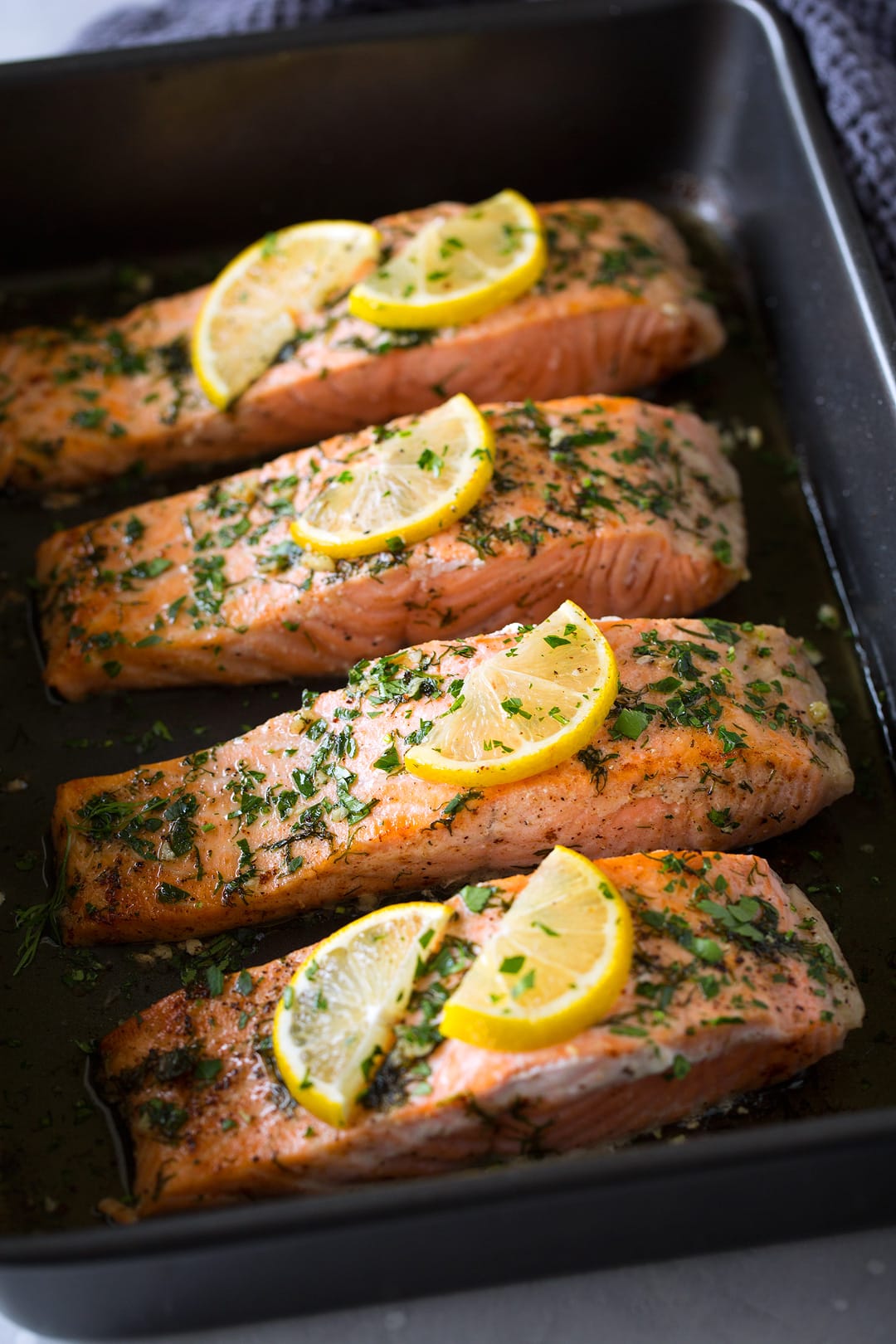
- Prep the salmon. Pat dry. Rub with oil or butter. Season with salt and pepper. Add lemon zest, garlic, or herbs if you like.
- Arrange in the pan. Place fillets skin-side down. For a whole side, tuck thin ends under so it cooks evenly.
- Optional moisture trick. Set a small oven-safe cup of hot water in a corner of the pan for gentle humidity. Do not pour water into the roaster base.
- Load and cover. Set the pan in the roaster. Close the lid fast to keep heat in.
- Bake to temp, not time. Start checking early. Insert a thermometer into the thickest part. Aim for 125–130°F for medium, 135–140°F for barely firm, 145°F for USDA doneness.
- Tent if needed. If the top browns too fast, tent loosely with foil. Keep the lid closed as much as you can.
- Rest. Remove the pan. Let salmon rest 3–5 minutes. Carryover heat will finish the cook.
- Finish and serve. Add fresh lemon juice, a drizzle of olive oil, or a quick sauce.
h3 What temperature should I set on a roaster oven for salmon?
300–325°F gives gentle, even heat with juicy results. Go 350°F if you want a slightly faster bake or crisper edges. Start checking doneness a few minutes earlier at higher heat.
h3 Do I need to add water to the roaster?
No. You do not need water for baking salmon. If you want extra moisture, place a small ramekin of hot water in the pan, not in the roaster base.
h3 Should I cover salmon with foil in a roaster oven?
Not at first. Bake uncovered so the surface dries a bit and seasons well. Tent with foil only if the top browns before the center reaches your target temp.
What Can I Use Instead of Hoisin Sauce for Bourbon Chicken? – 5 Best Easy Substitutes

Time and temperature guide
Cook by temperature first. Use time as a guide. Salmon thickness changes cook time a lot.
At 300°F:
- 1-inch fillets: 18–22 minutes
- 1.5-inch fillets: 22–28 minutes
- Whole side, average thickness: 25–35 minutes
At 325°F:
- 1-inch fillets: 14–18 minutes
- 1.5-inch fillets: 18–24 minutes
- Whole side, average thickness: 22–30 minutes
At 350°F:
- 1-inch fillets: 12–15 minutes
- 1.5-inch fillets: 15–20 minutes
- Whole side, average thickness: 18–25 minutes
Pull a bit early if you want medium. For example, remove at 120–125°F and rest. The USDA recommends 145°F for fish. That is fully cooked and flaky. Choose based on your taste and food safety needs.

Seasoning ideas and flavor variations
Keep flavors bright and simple. Here are fast, reliable picks:
- Lemon garlic butter: Melted butter, minced garlic, lemon zest, parsley
- Maple soy: Maple syrup, low-sodium soy sauce, grated ginger, sesame oil
- Cajun heat: Cajun seasoning, smoked paprika, brown sugar, olive oil
- Herb crust: Dijon, olive oil, panko, dill, chives, lemon zest
- Mediterranean: Olive oil, oregano, capers, cherry tomatoes, olives
- Miso glaze: White miso, honey, rice vinegar, a splash of mirin
Tip: Add sweet glazes in the last 5–7 minutes to prevent burning.
:max_bytes(150000):strip_icc()/280316-garlic-butter-roasted-salmon-with-potatoes-and-asparagus-beauty-603f5626f1eb440681a8010f63b08bfc.jpg)
Whole side, fillets, and frozen salmon
Whole side
- Trim thin belly pieces and tuck under so it cooks even.
- Season well and bake at 300–325°F.
- Check temp in the thickest center area.
Fillets or portions
- Choose even thickness for equal cook times.
- Keep skin on for easy handling and moisture.
Frozen salmon
- It works. Rinse off ice glaze under cold water. Pat dry. Season.
- Bake at 325–350°F. Add 5–10 minutes to the usual time.
- Check temp in the center. Season again if needed at the end.
h3 Can I bake salmon from frozen in a roaster oven?
Yes. Bake at 325–350°F and add about 5–10 minutes. Check 125–145°F for doneness. Pat dry first so spices stick.
h3 How do I cook a whole side of salmon in a roaster?
Set to 300–325°F. Bake on a lined pan until the center hits your target temp. Tent edges if they cook faster than the middle.

Doneness, food safety, and resting
Check with a thermometer. It is the most reliable way. Insert into the thickest part from the side if you can.
Doneness guide
- Silky and moist: 120–125°F
- Medium and flaky: 125–135°F
- Firm and fully cooked: 145°F (USDA recommended)
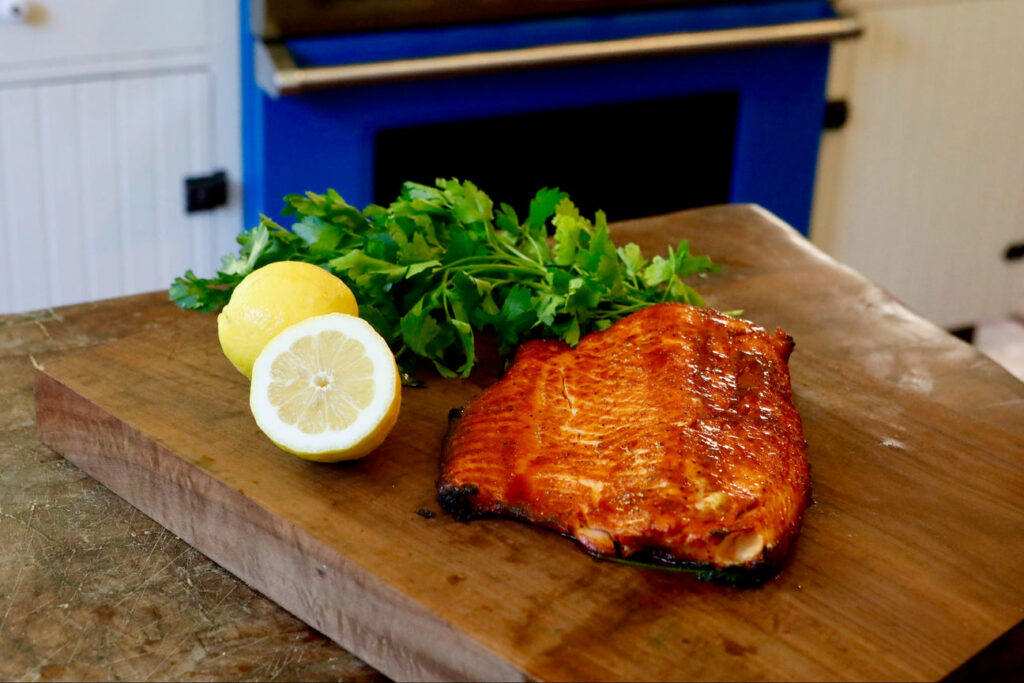
Let it rest 3–5 minutes. That helps juices settle. If you see white albumin on top, it is normal. It means the fish got a bit hot but is still safe and tasty.
Troubleshooting and pro tips from my kitchen
I learned these the hard way, so you do not have to.
Common mistakes
- Opening the lid often. You lose heat and add cook time.
- Skipping the preheat. Salmon cooks unevenly.
- Guessing doneness. Use a thermometer.
- Crowding the pan. Leave space for hot air to flow.
Pro tips
- For a party, bake a whole side at 300°F. Hold at 140°F in the roaster for up to 30 minutes without drying. Brush with butter and cover loosely.
- If edges cook faster than the center, fold a foil shield over the edges.
- For crisp skin, chill the seasoned fish uncovered for 20 minutes, then bake. Finish with a quick sear in a skillet if you want extra crisp.
- Roaster ovens run different. Do a test fillet once to calibrate time and temp.
A quick story
I once fed 20 people with two roaster ovens and two whole sides. I baked at 300°F, pulled at 128°F, and rested under loose foil. The salmon stayed juicy for the entire buffet. The roaster ovens made it stress-free, and cleanup took minutes.
Serving ideas and storage
Serving
- Bright finishers: Lemon wedges, dill, chives, capers
- Sauces: Lemon-dill yogurt, chimichurri, garlic butter, tahini drizzle
- Sides: Roasted asparagus, rice pilaf, quinoa salad, garlic potatoes
Storage
- Fridge: 3–4 days in a sealed container
- Freezer: Up to 2–3 months, wrapped tight
- Reheat: 275°F in the roaster or oven until 110–115°F inside. Or enjoy cold in salads.
Frequently Asked Questions of How to bake salmon in a roaster oven
How many fillets can I bake at once in a roaster oven?
Most 18–22 quart roasters hold a full sheet-style pan or a whole side. Keep space between pieces so air can circulate and cook evenly.
Do I need to flip salmon in a roaster oven?
No. Bake skin-side down and leave it alone. It will cook evenly with the lid on.
Can I use a glass dish inside the roaster oven?
Yes, if it is oven-safe and fits on the rack. Glass can lengthen cook time slightly, so check temp near the end.
How do I stop salmon from sticking?
Use parchment or lightly oil the pan. Let the fish rest a minute after baking so it releases cleanly.
Is 145°F the best target for salmon?
145°F is the USDA safe temp. Many cooks prefer 125–130°F for a silkier texture. Choose what fits your taste and safety needs.
Conclusion
You now know how to bake salmon in a roaster oven with confidence. Preheat well, season simply, and cook to temp, not time. Use the tips and timing guide, and your salmon will turn out moist and flaky every time.
Try it this week with a new flavor combo. Share your results or questions in the comments, and subscribe for more stress-free, flavor-forward cooking guides.