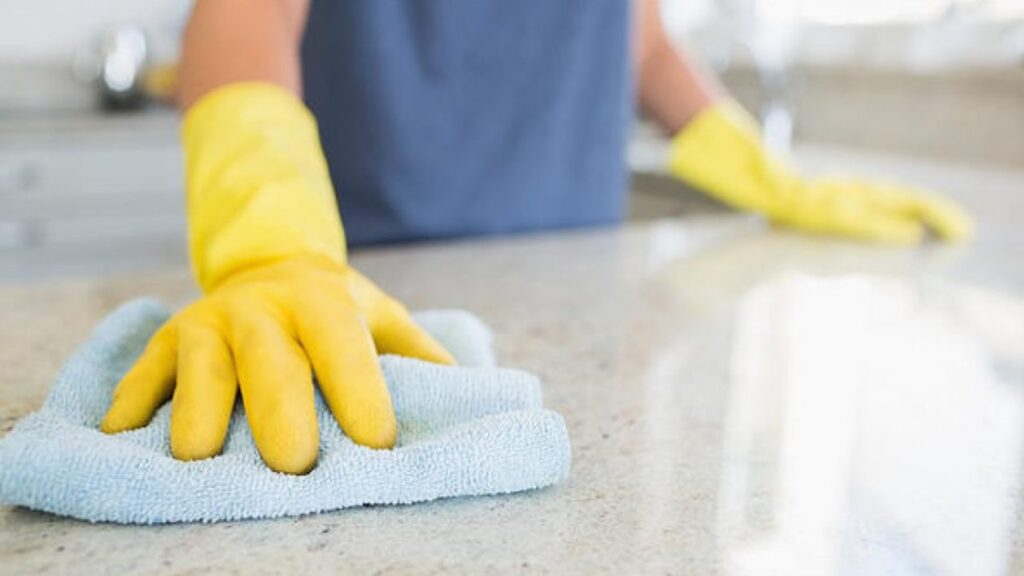
If you do not know How to Remove Stains From Laminate Countertops: Most laminate stains vanish with dish soap, baking soda paste, or diluted peroxide.
To remove stains from laminate countertops, start by cleaning the surface with warm water and mild dish soap to remove dirt and grease. For tougher stains, make a paste of baking soda and water, gently rub it onto the stain with a soft cloth, and let it sit briefly before wiping clean. Avoid abrasive scrubbers or harsh chemicals, as they can damage the laminate finish. Regular gentle cleaning and quick stain removal help keep laminate countertops looking new.
If you want a clear plan for how to remove stains from laminate countertops, you’re in the right place. I’ve cleaned hundreds of kitchens and tested what actually works on coffee rings, dye spills, ink, rust, and more. I’ll show you safe steps, easy recipes, and pro tips so you can tackle any stain, protect your finish, and keep that smooth, like-new look.
Table of Contents
Understand your laminate and why stains happen
Laminate is a tough plastic surface fused over particleboard. It resists most stains, but dyes and oils can settle into tiny scratches and seams. Heat and harsh scrubbers can also dull the finish, which makes future stains stick faster.
Spot the stain type first. Tannin stains come from coffee and tea. Oil stains come from cooking and cosmetics. Dyes come from food coloring, turmeric, and berries. Ink and marker sit on top but can shadow. Rust and hard water leave mineral spots. Knowing how to remove stains from laminate countertops starts with proper ID.
I learned this the hard way on a white rental unit. The coffee ring looked simple, but oil spray had locked it in. A mild degreaser first, then a gentle baking soda paste, lifted it without a trace.
If you have quartz countertops which needs to be cleaned but cleaner must suitable to work.
What you need before you start
Gather a small kit so you do not over-scrub or over-soak.
- Soft microfiber cloths and paper towels
- Non-scratch sponge and a melamine sponge
- Dish soap and warm water
- Baking soda
- 3% hydrogen peroxide
- White vinegar
- Isopropyl alcohol, 70% or higher
- Acetone or nail polish remover, for tiny spots only
- Oxygen bleach powder, color-safe, used per label
- Painter’s tape, cotton balls, and plastic wrap for poultices
- Gloves and good airflow
Here is what I use when I teach how to remove stains from laminate countertops. Keep a timer and work in small sections. Avoid soaking seams along sinks and edges.
Step-by-step: How to Remove Stains From Laminate Countertops
Follow these steps to learn how to remove stains from laminate countertops by type. Work from mild to strong. Always test in a hidden spot first.
Coffee and tea, soda, and wine
- Mix a few drops of dish soap in warm water. Wipe and rinse.
- Make a baking soda paste with water. Spread a thin layer, wait 5 to 10 minutes, then wipe.
- For light laminate, place a peroxide-soaked cotton ball on the spot, cover with plastic wrap, wait 5 minutes, then lift and rinse. This is a classic case when learning how to remove stains from laminate countertops.
Grease, cooking oil, and sunscreen
- Use dish soap first. Hot water helps cut grease.
- If needed, use a mild kitchen degreaser. Wipe and rinse well.
- Stubborn oil shadows may lift with a light pass of a melamine sponge. Use gentle pressure.
Food dyes, turmeric, berries, ketchup, and mustard
- Wipe fast with soapy water.
- For lingering color, use a peroxide poultice. Soak cotton with 3% peroxide, set on the stain, cover with plastic wrap, and wait 5 to 15 minutes. Check every few minutes.
- Rinse well. Repeat once if needed. Do not over-bleach darker laminate.
Ink, permanent marker, and hair dye
- Dab with isopropyl alcohol on a cloth. Blot, do not rub.
- For tiny ink dots, a quick tap of acetone on a cotton swab can help. Rinse at once.
- A gentle melamine sponge pass can finish the job. Keep strokes light.
Rust marks and hard water spots
- For rust, make a baking soda paste and let it sit for 10 minutes. Wipe and rinse.
- For mineral spots, use equal parts white vinegar and water. Apply, wait 3 minutes, then rinse.
- Tough rust can respond to a peroxide poultice or an oxygen bleach solution used per label.
Paint, glue, and sticker residue
- Lift residue with plastic scraper. Avoid metal blades.
- Use isopropyl alcohol to soften sticky bits. Wipe clean.
- For latex paint specks, warm soapy water plus a melamine sponge works well.
Scuff marks and gray haze
- Use a melamine sponge with light pressure and water only.
- Rinse and dry. Over-scrubbing can dull the finish.
I’ve used every method above on client kitchens. The big lesson: take your time. Short, gentle passes beat one hard scrub every time.
Cleaner recipes and safe ratios
These mixes are the core of how to remove stains from laminate countertops safely. Start mild. Rinse and dry after each step.
- Dish soap solution: 1 teaspoon in 2 cups warm water. Great first pass.
- Baking soda paste: 2 parts baking soda to 1 part water. Thin layer, 5 to 10 minutes.
- Peroxide poultice: 3% hydrogen peroxide on cotton, cover with plastic wrap, 5 to 15 minutes on light laminate only.
- Vinegar mix: equal parts water and white vinegar for mineral spots. Limit to a few minutes.
- Oxygen bleach: mix per label, usually warm water and a small scoop. Apply, wait a few minutes, rinse well.
- Alcohol wipe: 70% to 91% isopropyl alcohol on a cloth for ink and dye smudges.
- Acetone spot touch: a drop on a swab for tiny ink or nail polish. Dab, then rinse at once.
Pro tip from my jobs: clock your dwell time. A timer prevents the “I forgot and it etched” moment. If you worry about color shift, lift and check every 2 minutes.
What Can I Use Instead of a Drain Stopper? (2026) – Easy DIY Fixes That Work
What not to do and safety notes
Avoid these mistakes when practicing how to remove stains from laminate countertops. They cause most of the damage I see.
- Do not use steel wool or gritty powders. They scratch and dull the sheen.
- Do not soak seams or let water sit. Swelling ruins the board under the laminate.
- Do not use pure bleach on colored or patterned tops. It can fade spots.
- Do not mix bleach and ammonia or vinegar. That creates dangerous fumes.
- Do not use oven cleaner, drain opener, or paint stripper. They can melt the surface.
- Do not put hot pots or pans on laminate. Heat marks are not stains and do not lift.
Wear gloves. Keep windows open. Read labels. When in doubt, test first and go slow.
Prevent stains before they set
Once you know how to remove stains from laminate countertops, keep them from coming back. A tiny habit shift saves hours later.
- Wipe spills right away, especially coffee, wine, and tomato sauce.
- Use cutting boards, trays, and coasters. Catch drips before they spread.
- Keep a soft cloth handy for daily wipe-downs with soapy water.
- Avoid dark hair dyes or art inks near seams and backsplashes.
- Add a thin coat of a non-waxy countertop polish or a carnauba-based spray. It adds a sacrificial layer and makes cleanups faster.
I like a simple nightly pass with warm soapy water. It takes a minute and keeps buildup away.
Troubleshooting stubborn stains and small repairs
If you still struggle with how to remove stains from laminate countertops, try a second mild cycle rather than jumping to harsh cleaners. Change one variable at a time: contact time, cleaner type, or tool.
Light color shift on white tops often lifts with a fresh peroxide poultice. Shadowing on dark tops may respond to alcohol and a gentle melamine pass. Deep burns, chips, swelling at seams, or large dye spills may need a repair kit or a pro.
Check your care guide. Many brands list approved cleaners and warn about heat and steam. If the counter is under warranty, follow those rules to avoid claims issues.
Frequently Asked Questions of how to remove stains from laminate countertops
What is the safest daily cleaner?
Use warm water with a few drops of dish soap and a soft cloth. Rinse and dry to avoid streaks or water at seams.
Can I use bleach on laminate?
Use only diluted bleach on white or very light laminate and rinse well. Avoid bleach on colored or patterned tops to prevent fading.
Will a Magic Eraser damage laminate?
A melamine sponge is mildly abrasive, so use light pressure and water. Test in a hidden spot first and avoid scrubbing gloss areas hard.
How do I remove permanent marker?
Blot with isopropyl alcohol on a soft cloth and rinse. For tiny dots, a quick dab of acetone on a swab can help, then rinse.
What lifts turmeric or food dye stains?
Try a baking soda paste first, then a short peroxide poultice on light laminate. Rinse well and repeat once if needed.
Is vinegar safe for daily use?
Use a diluted mix for mineral spots and rinse after a few minutes. Do not use strong vinegar daily, since acids can dull finishes over time.
How to remove stains from laminate countertops without chemicals?
Start with warm soapy water and baking soda paste. Use a melamine sponge with water only for scuffs, then rinse and dry.
Conclusion
You now have a simple, proven plan for how to remove stains from laminate countertops. Start mild, match the method to the stain, time your steps, and protect the finish. A few smart habits will keep your counters bright and easy to clean.
Ready to put this guide to work? Try one section today, then share your results or questions. Subscribe for more quick, field-tested home care tips.